
Independent Coastal Campervan Stays|How to Find and Check a Seaside Spot
A practical guide to finding a possible coastal campervan overnight spot with Google Maps, satellite view and Street View—plus on-site, safety and low-impact checks for Taiwan.
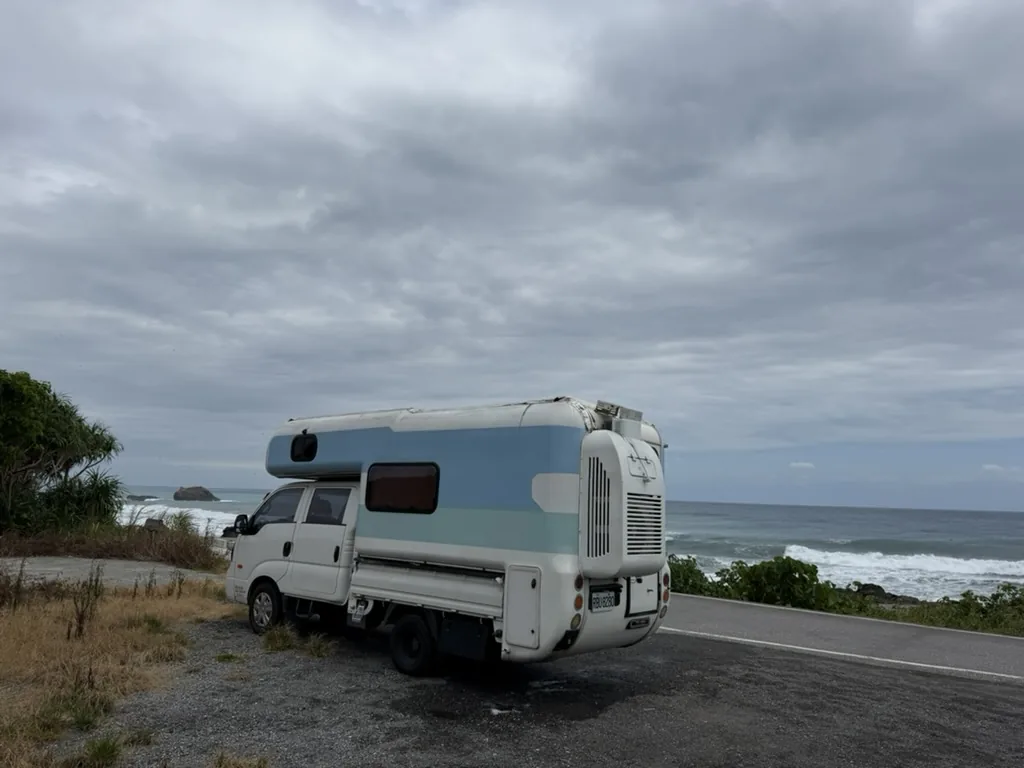
Independent overnight stops: the freest campervan experience, and the one that needs the most judgement
One of the best things about a campervan is that every night does not have to be at a campground. Where local rules permit, the setting is safe and nobody is disturbed, you may be able to spend a quiet night inside the vehicle near the landscape you came to see. For a first rental, however, we still recommend an established campground on night one. Learn the power, water, air conditioning, beds and interior routine first; try a more independent overnight stop on night two.
Independent coastal stay
Use maps to shortlist places, then check rules and safety on site.
Established campground
The easiest first night for learning the vehicle and its systems.
Hot-spring stay
Soak, then rest at a place where an overnight stay is confirmed.
Family route
Enjoy parks by day and use a legal campground or permitted site at night.
What did one real coastal stop look like?
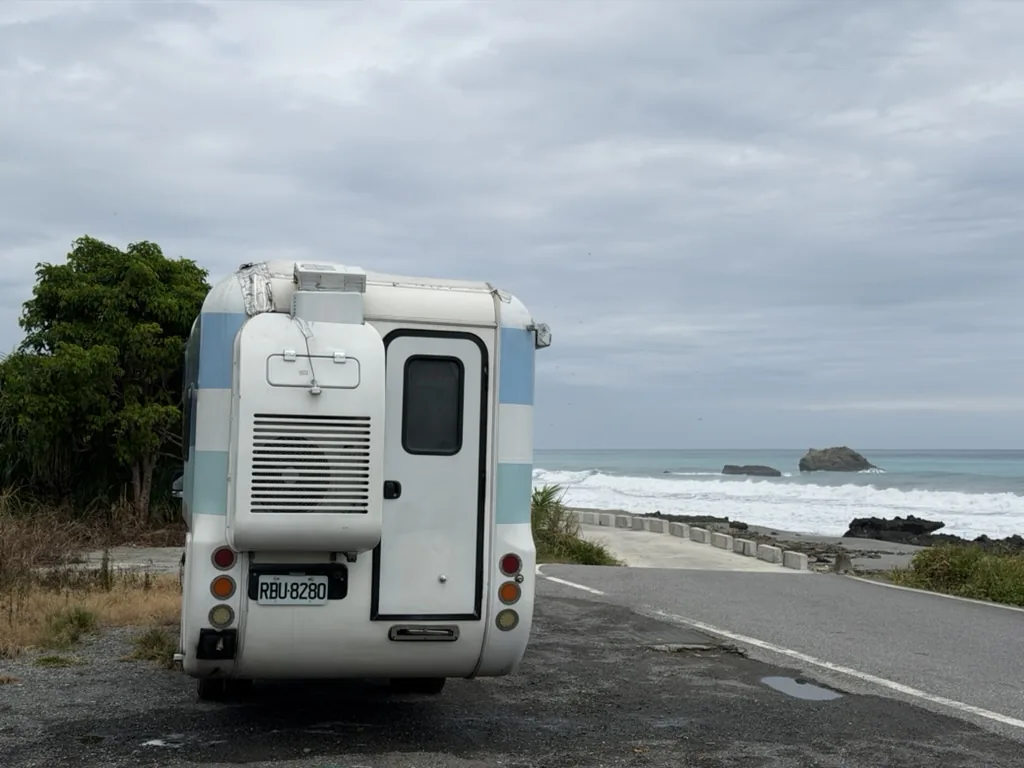
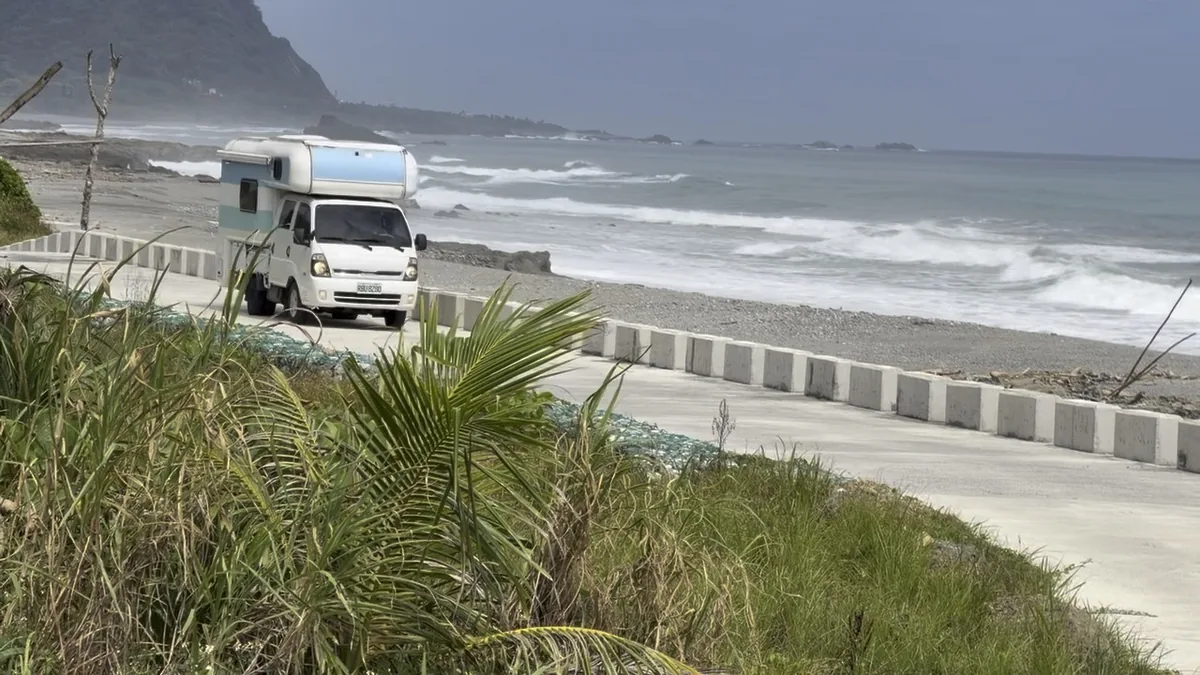
We once found a level pull-off beside a small coastal road. We arrived in daylight, checked the road, sea conditions and surroundings, made sure the van did not obstruct traffic, saw no nearby homes and found no sign prohibiting parking or an overnight stay before deciding to stop.
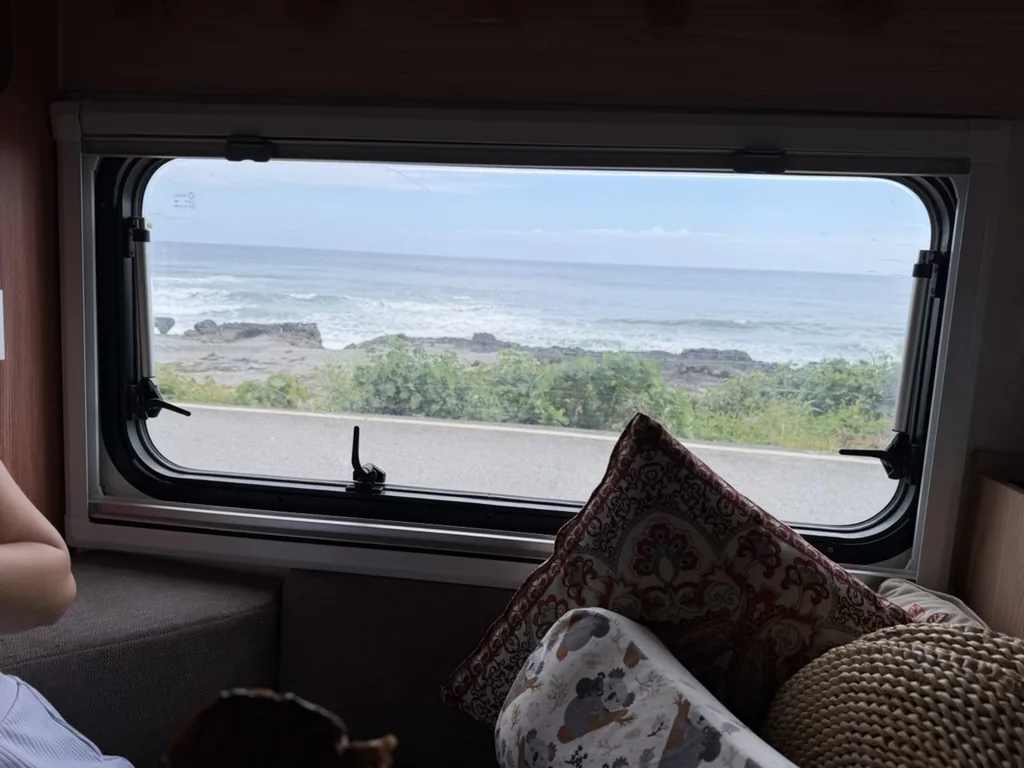
Near sunset, we bought fish and seafood at a harbour. We cooked the fish and hot pot quickly on a small table beside the van, packed the equipment away immediately and took the meal inside. Later we walked by the sea with drinks, returned to the van for a quiet night, then woke to an ocean view and an unhurried breakfast. The pleasure of this kind of travel is not turning a parking area into a full campsite. It is using the van as a small room close to the view, ready to pack up and leave at any time.
Finding a possible coastal spot with Google Maps: three layers of checks
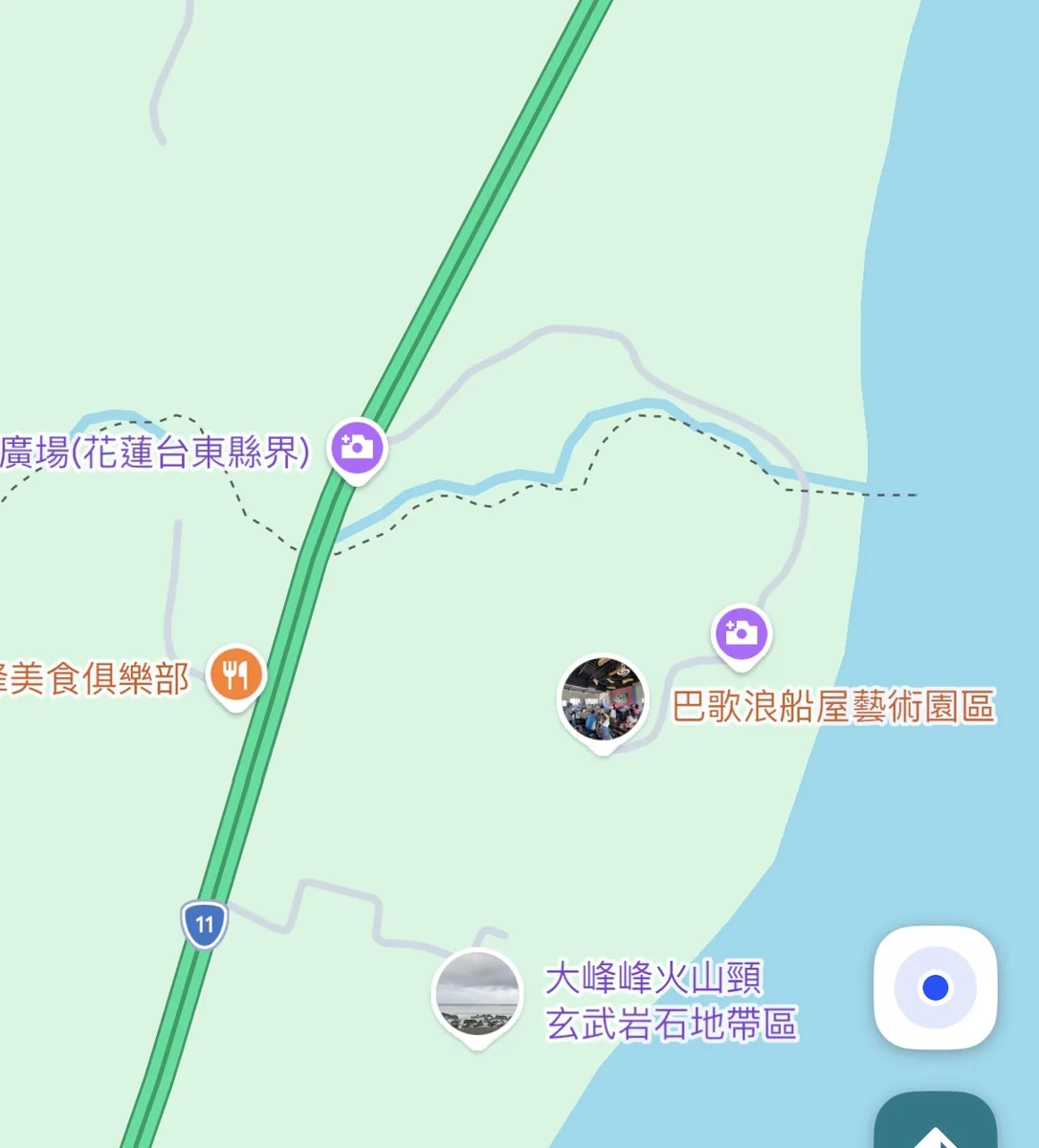
Step 1|Map view: look for a minor road near the coast
Do not focus only on the main coastal highway or a popular scenic car park. The highway has faster traffic and road noise, while busy viewpoints have frequent visitors and are rarely comfortable for a long stop. In standard map view, look for a minor road branching from the main route and running close to the shore. Then check whether the map suggests a turning area, pull-off or space beyond the traffic lane.
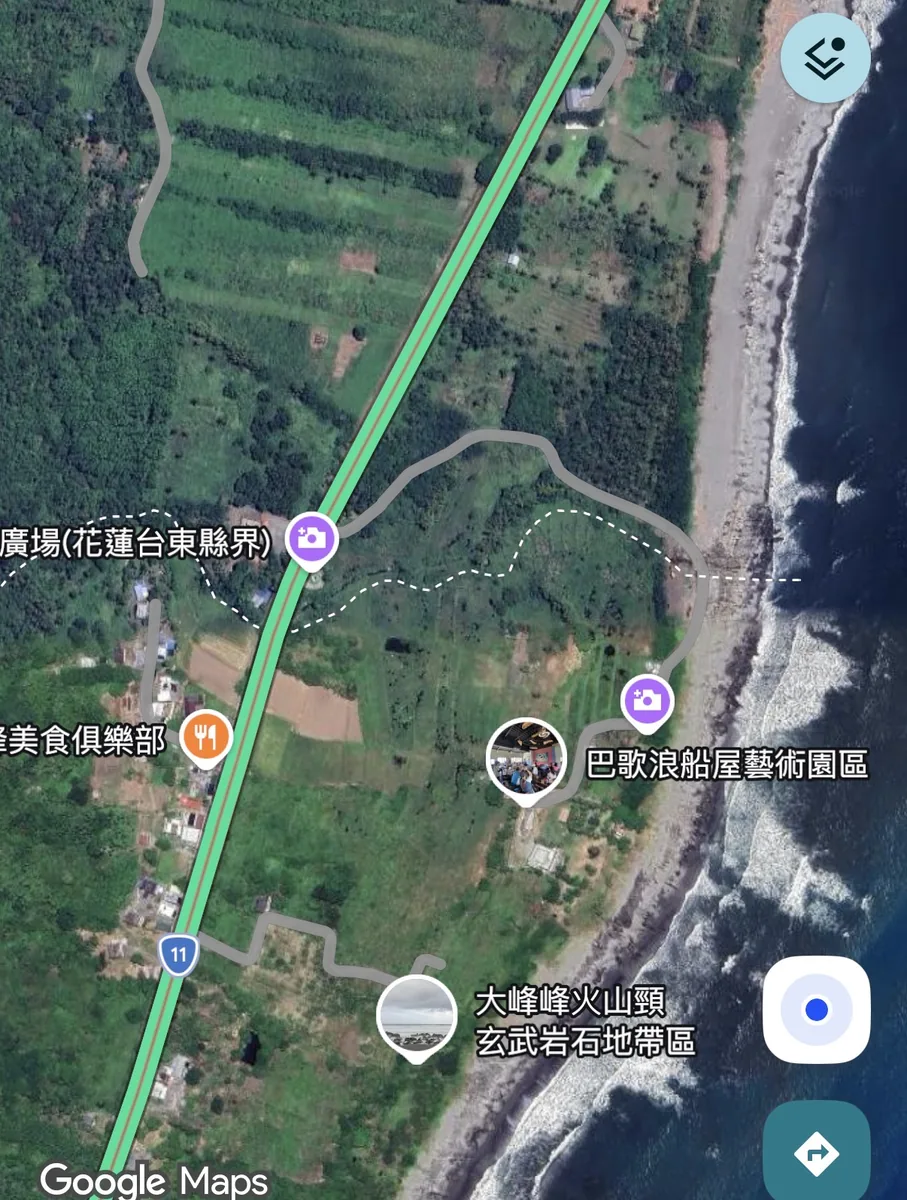
Step 2|Satellite view: inspect homes, terrain and the actual sea view
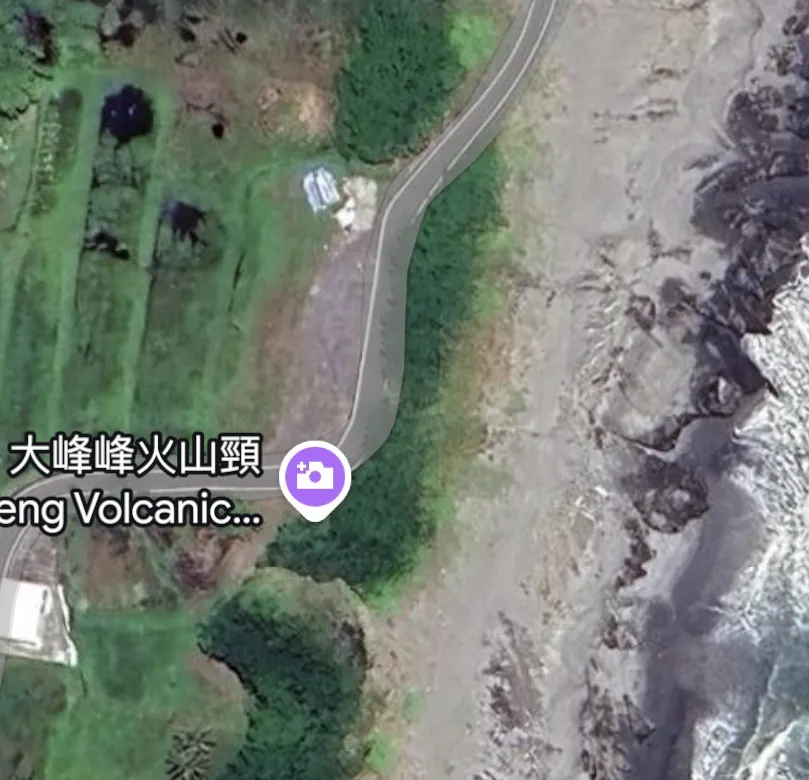
Switch to satellite view and rule out places immediately beside homes, farm access, private entrances or narrow terrain. Look for a level surface, safe access, enough turning room and whether a tall seawall would block the view. Satellite imagery also helps show whether the apparent “open space” is actually a field, beach, drainage channel or private property.
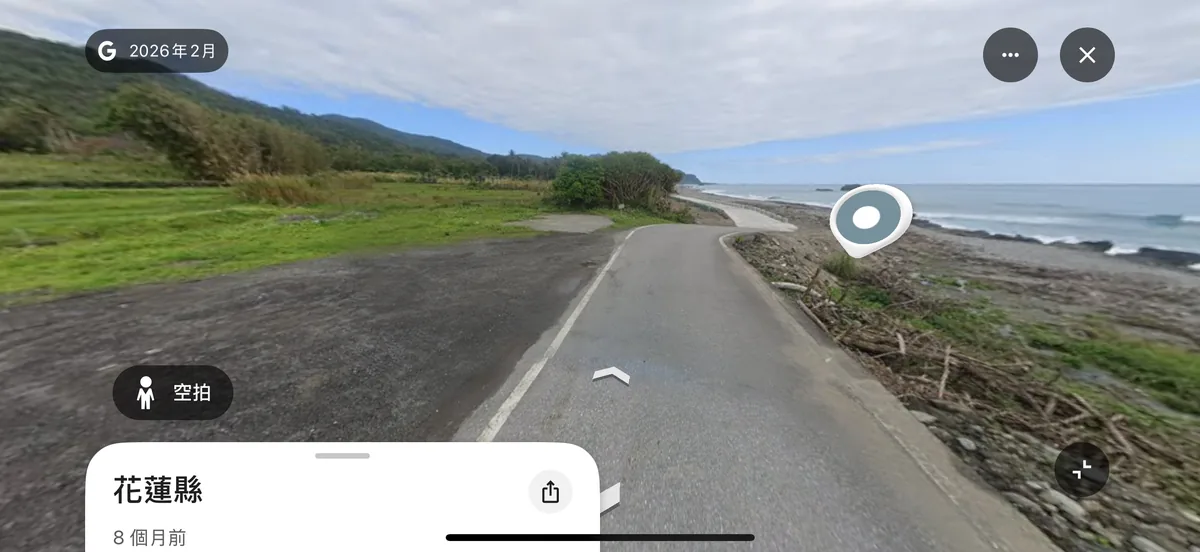
Step 3|Street View: see what the road really looks like
Open Street View to check road width, turning angles, the condition of the surface, barriers, drains, passing space and signs that are not visible on the map. Street View may have been photographed months or years ago, so it is only the last screening layer before departure. Everything must be checked again when you arrive.
On arrival, ask again: is it actually appropriate to stay?
- Are there signs prohibiting parking, night-time stays, sleeping in vehicles, or access to private land?
- Can a vehicle about 5 m long, 2 m wide and 3 m high enter, turn and park fully within a legal area?
- Would the van block residents, farm access, fishing work, emergency access or other traffic?
- Is the surface level and firm, away from cliffs, rockfall, drains and the high-tide zone?
- Could swell, strong waves, monsoon wind, a typhoon system or the night tide create a hazard?
- Is there mobile reception and a safe route out if conditions change?
- If a manager, shop owner, landowner or nearby resident is available, have you received clear permission?
- If anything is uncertain, do you already have a nearby established campground as a backup?
Keep a low profile: a parking space is not a campground
At an ordinary permitted parking space, resting, sleeping and eating inside the vehicle may be acceptable, but that does not mean you can build a campsite around it. Unless the location explicitly allows it, keep the awning, camping chairs, stove, generator and outdoor lights packed away. If brief outdoor cooking is specifically permitted, keep it short, quiet, smoke-free and clear of access, then pack everything away and return inside.
- Never discharge grey water, washing water or toilet waste.
- Leave no rubbish, food or cleaning water, and do not feed wildlife.
- Do not run a noisy generator for long periods; never operate fuel-burning equipment inside the van or any enclosed space.
- Avoid music, bright exterior lights and late-night conversation that may disturb others.
- Keep chairs, mats and cooking equipment out of roads and public access areas.
- Remove every trace before leaving in the morning.
Why is this method easier on the coast than in the mountains?
Coastal areas often have minor roads parallel to the main highway, and a map makes the relationship between the sea, road, open ground and homes easier to understand. Mountain roads are usually narrow and winding with very little shoulder. An apparently open area may be private land, farm access, a rockfall zone or emergency passing space.
For mountain nights, choose an established campground, a venue that explicitly accepts campervans, or private land with the owner's permission. Public rest areas and car parks still require you to read the signs; toilets and parking bays do not automatically mean camping or sleeping overnight is allowed.
A simple plan for your first independent overnight stop
- Night one: use an established campground and learn the water, power, air conditioning, beds, toilet and storage.
- Day two: shortlist two or three options with map view, satellite imagery and Street View. Never depend on only one.
- Arrive in the afternoon: inspect the road, signs, sea conditions and surroundings before dark. Move on if it is unsuitable.
- At night: stay quietly inside, keep outdoor equipment packed and remain ready to leave.
- The next morning: take all rubbish and traces with you, then continue the coastal journey.
The freedom of an independent campervan stay is not that “everywhere is available.” It comes from observing carefully, respecting the place and keeping a flexible backup plan—so that, when you open your eyes in the morning, the view you hoped to reach is truly outside the window.
Updated 20 October 2026. Maps, Street View, roads and management rules change. This article teaches a screening and decision process; it is not permission to park or stay overnight at any specific location.
42 Memorable Campervan Overnight Stops Around Taiwan
Explore 42 campervan-friendly campsites, scenic vehicle stays, hot-spring stops and family routes around Taiwan, with photos, maps, reasons to go and practical cautions.
Read article
Two Israeli Women’s 9-Day Taiwan Campervan Road Trip | East Coast, Green Island, Kenting & Sun Moon Lake
A detailed nine-day Taiwan campervan route by two Israeli women: Dong'ao, Ocean Chill in Hualien, Green Island's ocean hot spring, Dawang in Zhiben, Kenting and two lake-view nights at Sun Moon Lake.
Read article
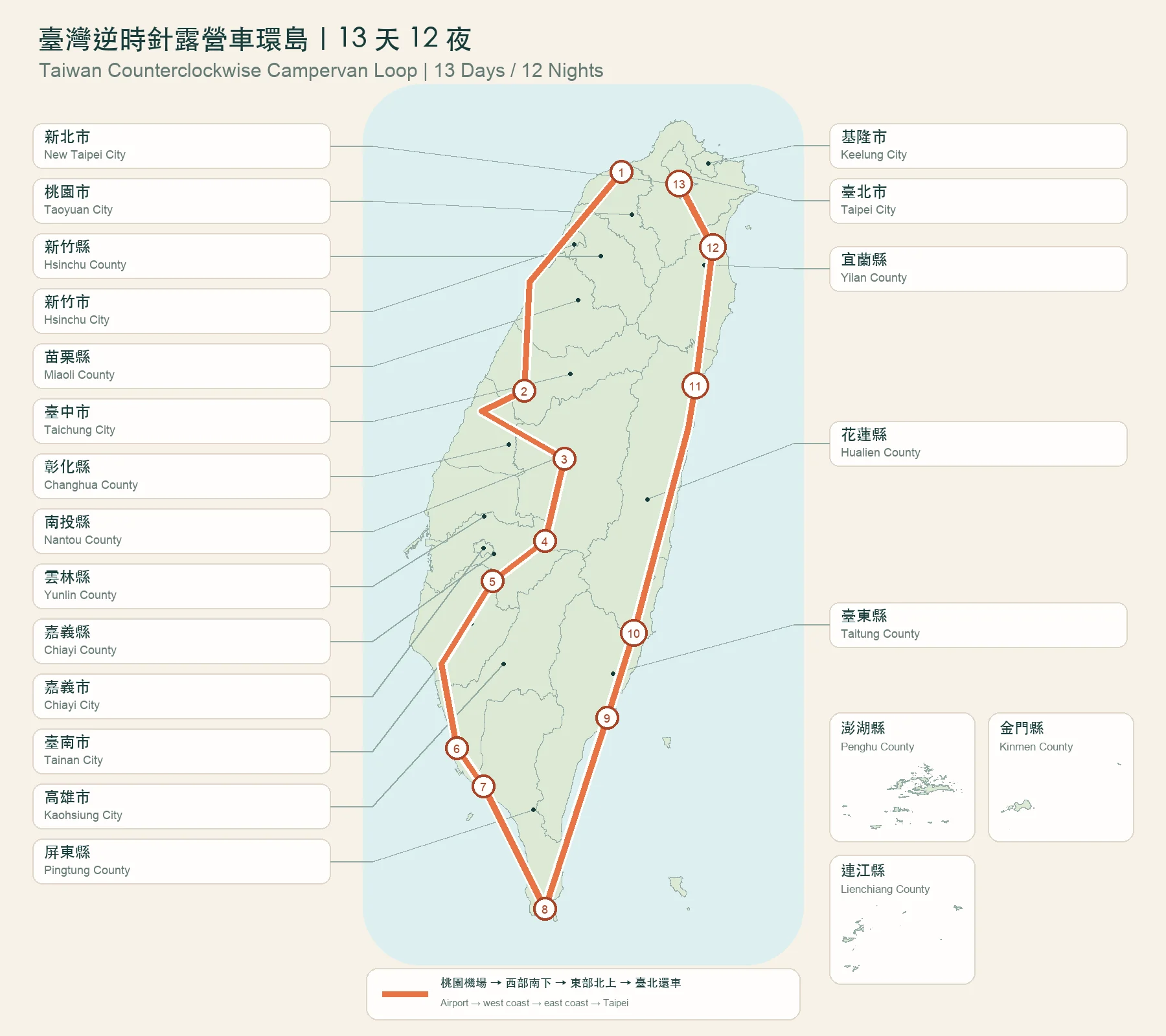
Taiwan Counterclockwise Campervan Loop | 13 Days and 12 Nights
A practical 13-day, 12-night Taiwan campervan loop for first-time international visitors: collect the van at Taoyuan Airport, travel south along the west, return north on the east coast and hand it back in Taipei.
Read articleWant to plan a trip like this?
Tell us your dates, group size, direction and whether you need delivery—we’ll help confirm rental options and pacing.