How to use the campervan|Your post-booking handbook
For guests who have booked or are about to depart: handover, driving notes, power and A/C, water and bathroom, beds, outdoor bundles, and return—organized in use order. Rates, deposit, bundle promos, and booking are on Price & Van; protection limits and accident responsibility are on Campervan Insurance & Renter Liability; copy details from the booking page to LINE/WhatsApp.
Four ways to enjoy a campervan trip. Each guide is currently in Traditional Chinese; always confirm the venue's current overnight rules before departure.
This video is a full inside-and-out tour—equipment locations, how to use them, and dinette-to-bed conversion.
Note:There is no microwave on board at this time (called out in the video); equipment is as at handover.
1. Basic walkthrough on handover day
~30-minute handover. First-time renters are welcome—we teach by doing.
At handover we cover:
Basic vehicle operation
Vehicle height and driving cautions
How beds convert
Heating and A/C use
Fridge and power use
Water tanks and hot water
Toilet and treatment chemicals
Shore power and charging
Outdoor furniture and bundle packing
Before-return reminders
2. Exterior equipment, keys & interior layout
Spend a few minutes on the exterior map and keys before departure—handover will be easier to follow.
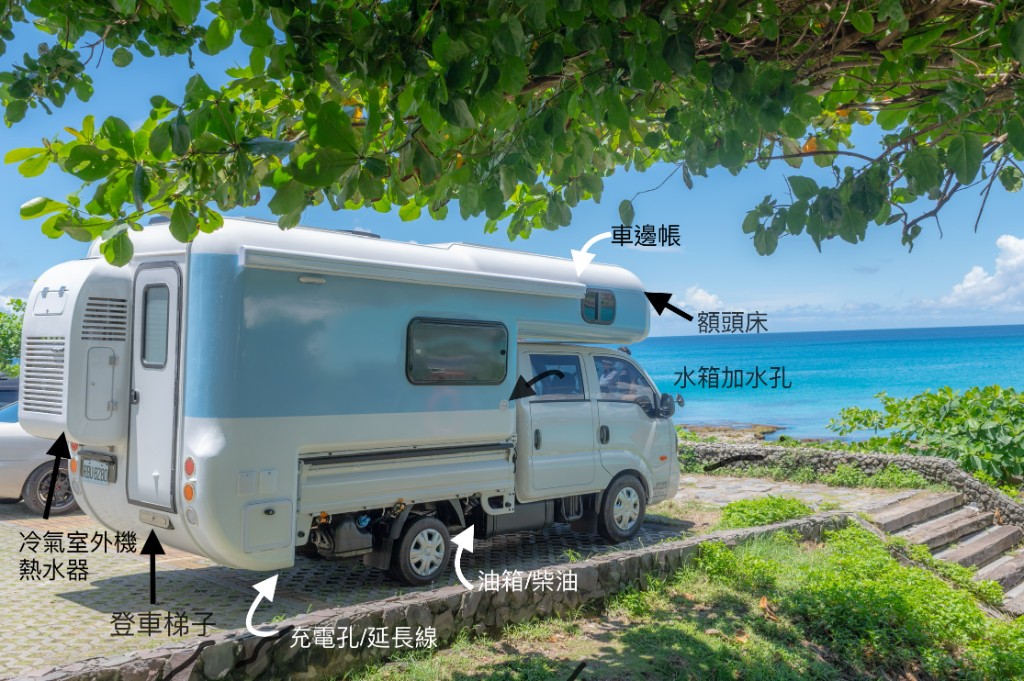
Exterior equipment overview (coastal parking example)
Know exterior equipment locations for water fill, fuel, and shore power.
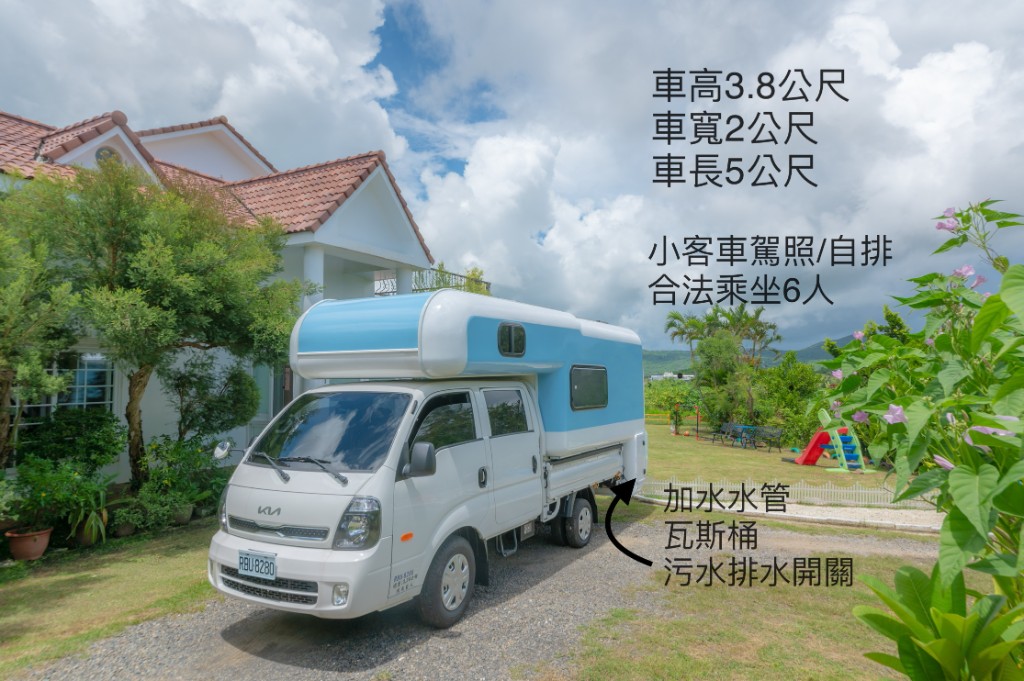
Exterior dimensions and side utilities/drain
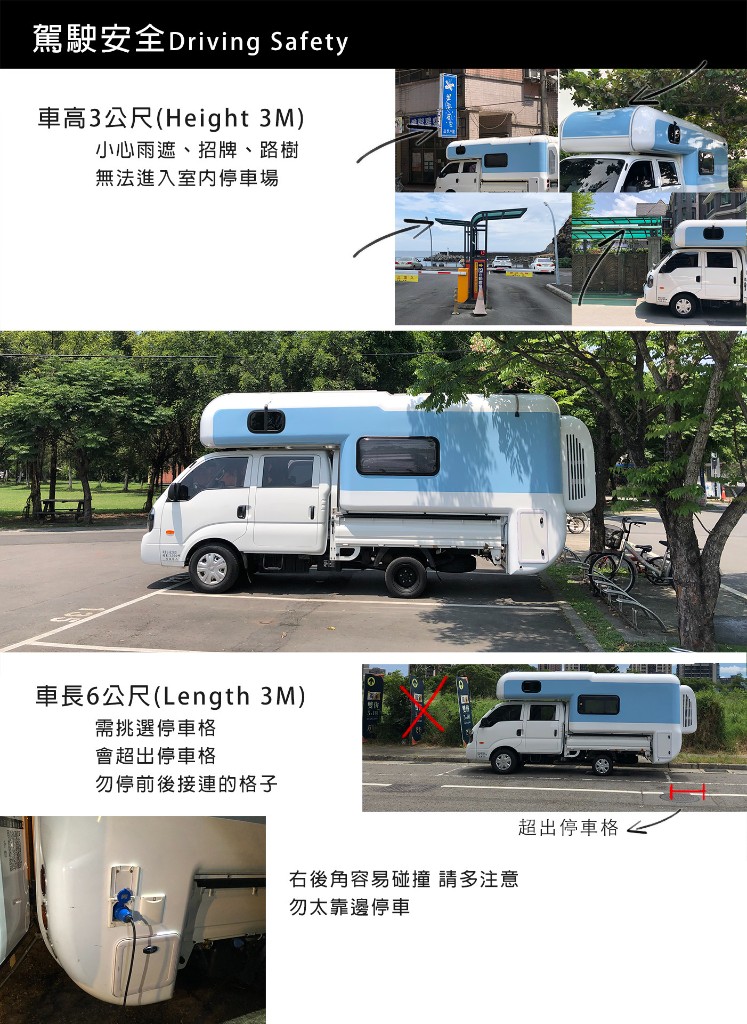
Diagram shows size and license needs; height ~3 m—watch bridges, awnings, and branches.
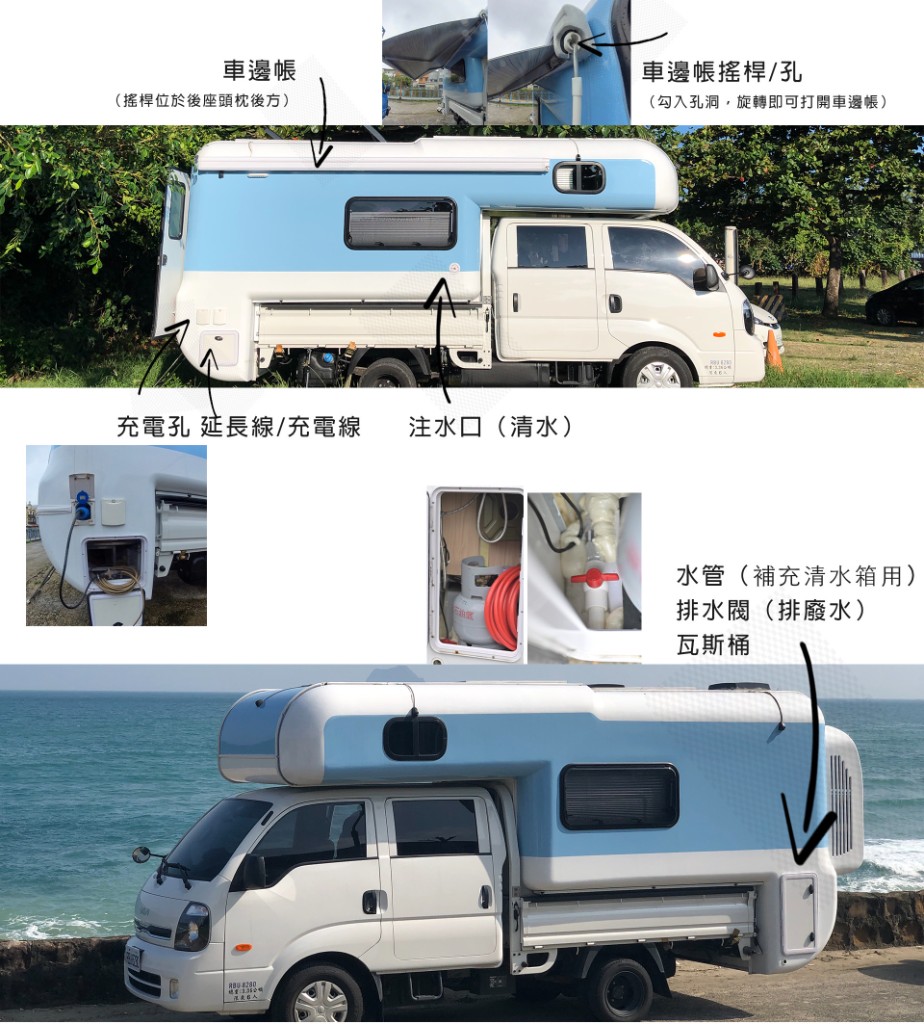
Side awning, water fill, power & drain (overview)
Locations for manual awning, fresh water, campsite power, and grey water.
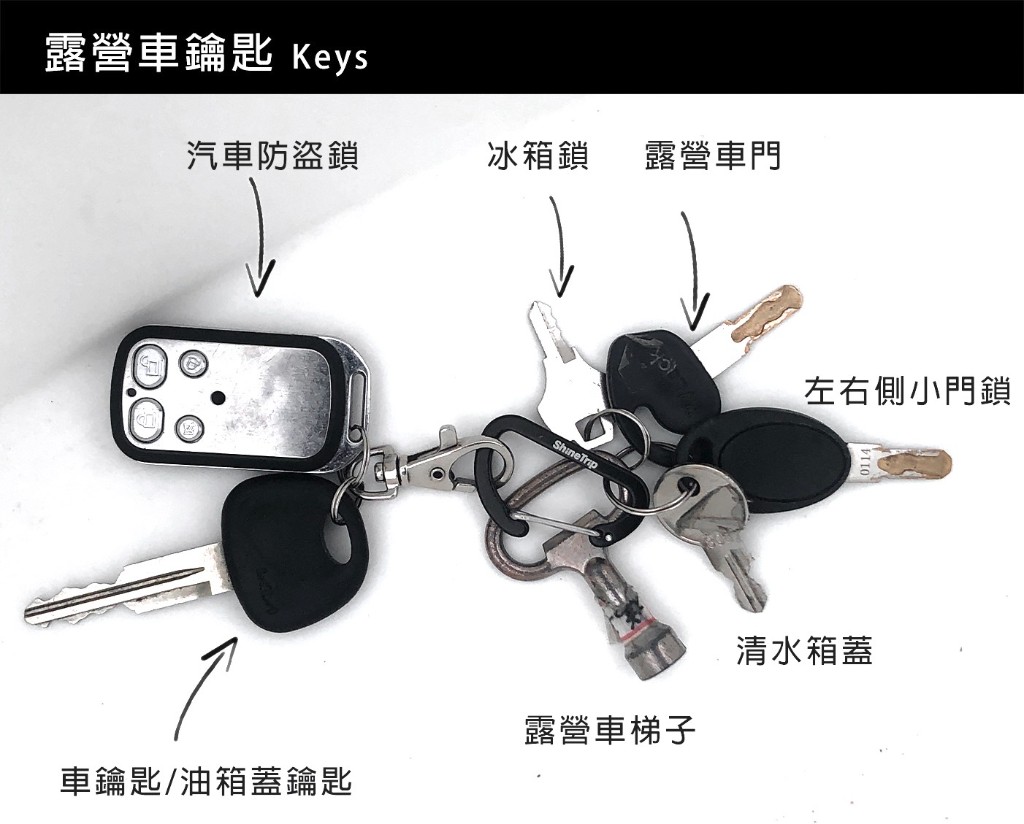
Campervan keys overview
You receive keys for vehicle remote, camper door, exterior compartments, fridge lock, water cap, ladder, and engine/fuel cap.
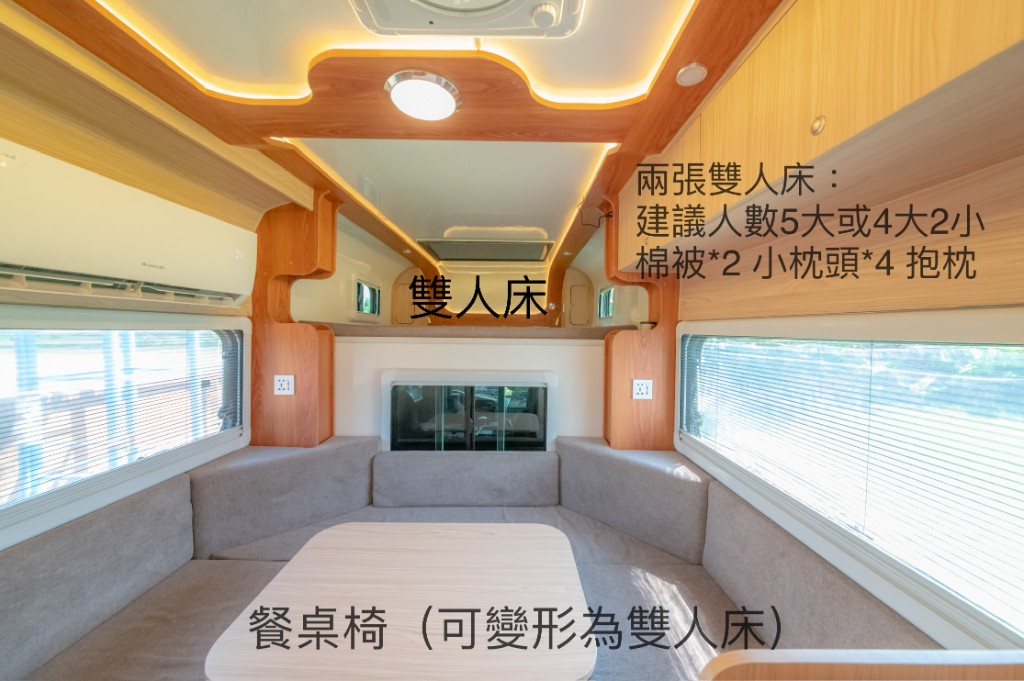
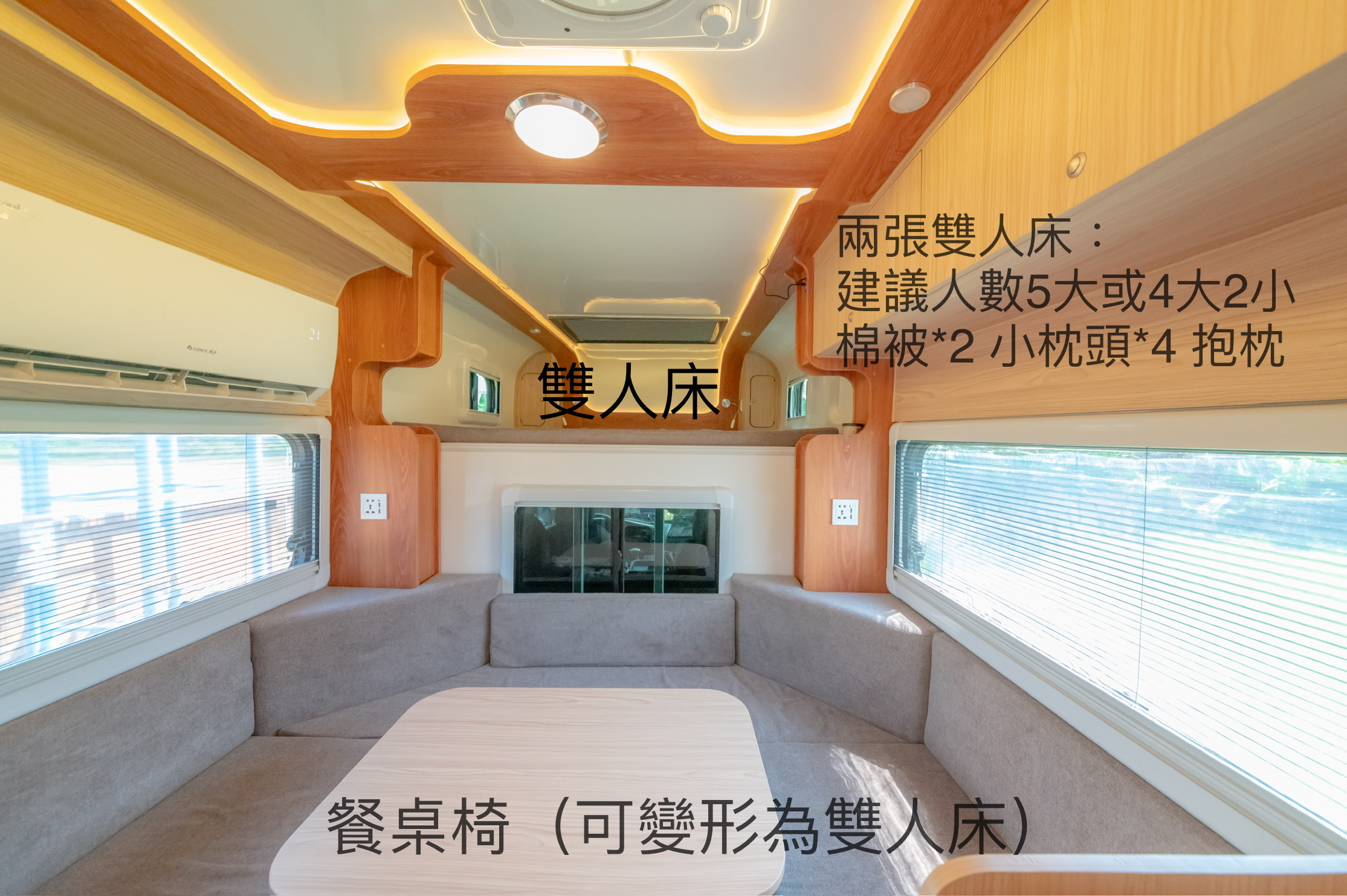
Two double beds and dinette-to-bed
Dine by day, sleep at night—great for family campervan trips and friends.
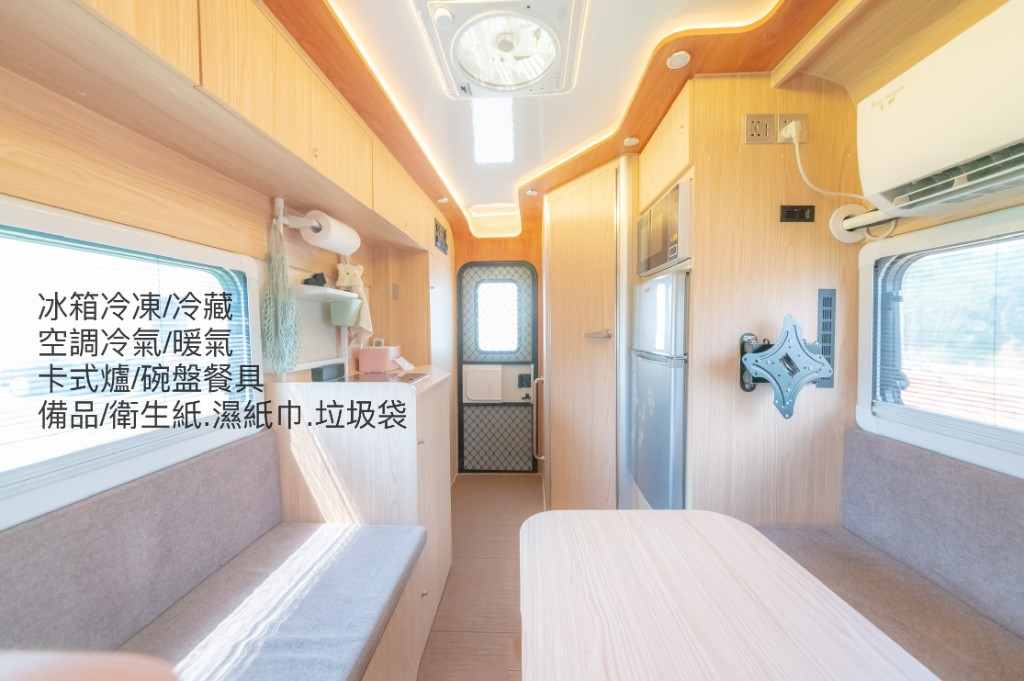
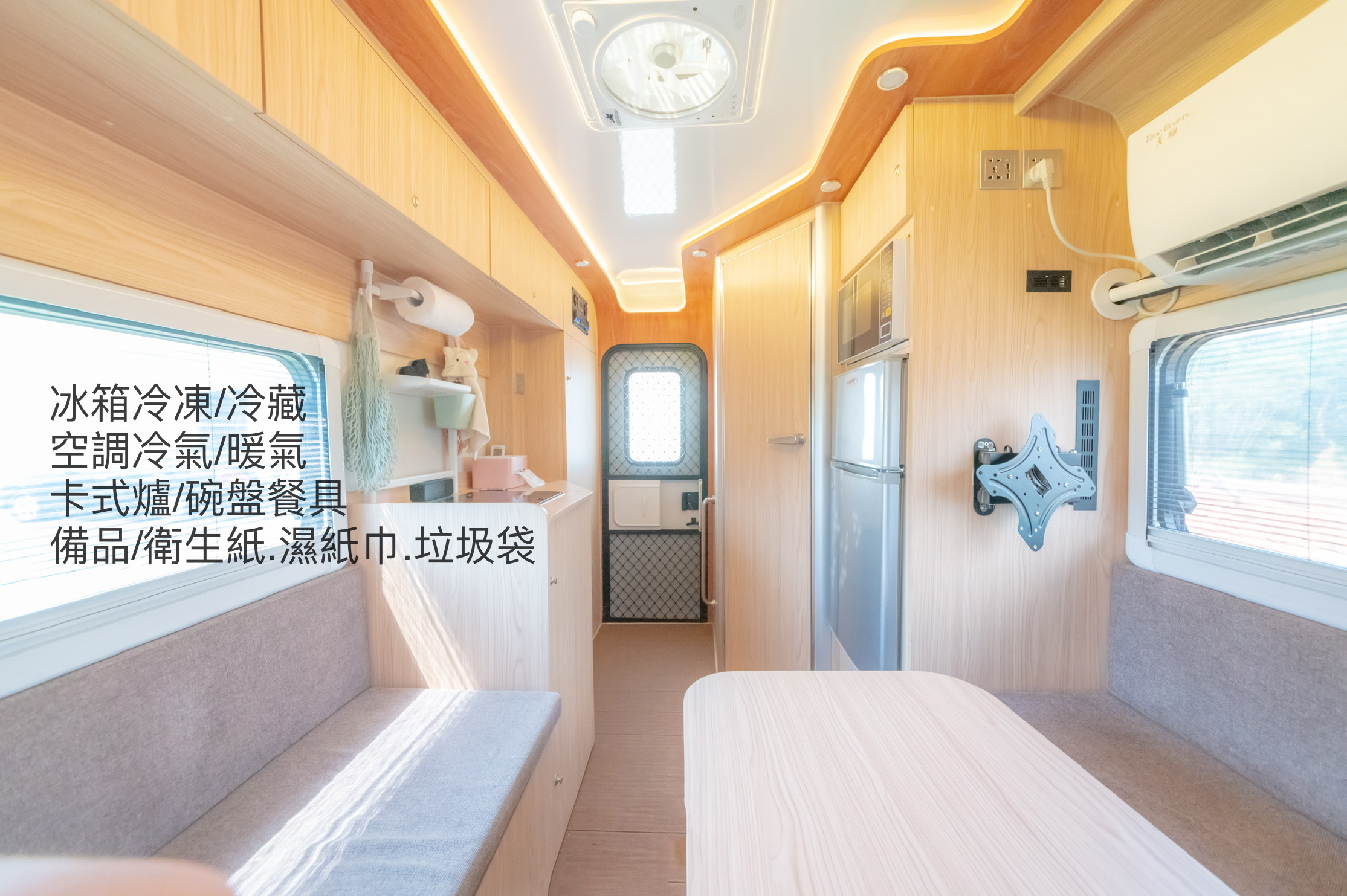
Kitchen, fridge & climate
Store food in fridge/freezer; secure stove and storage before driving.
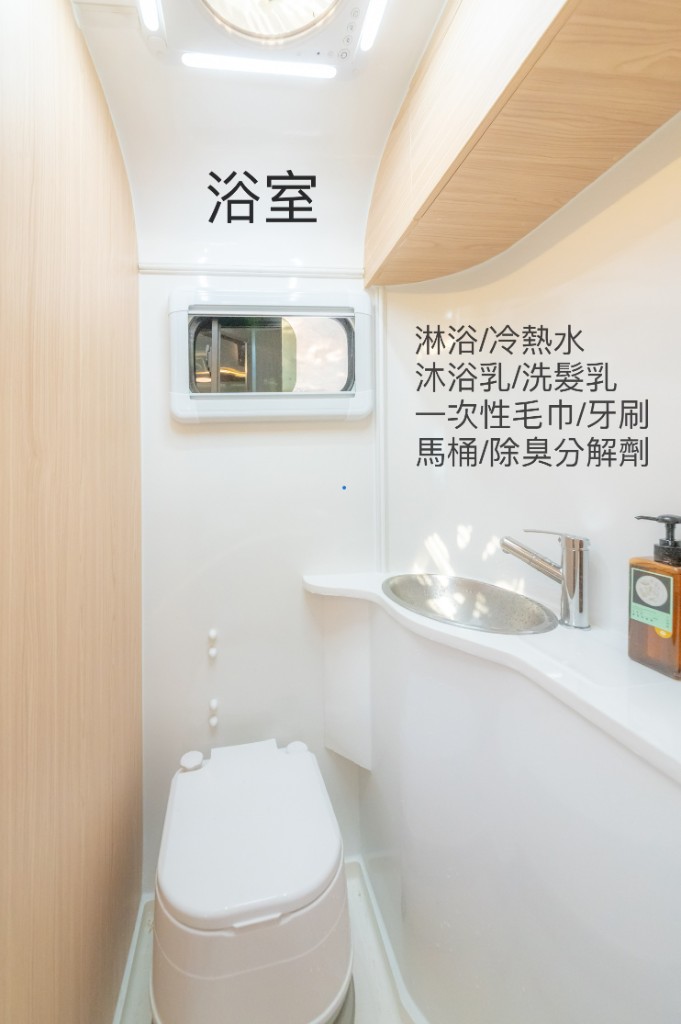
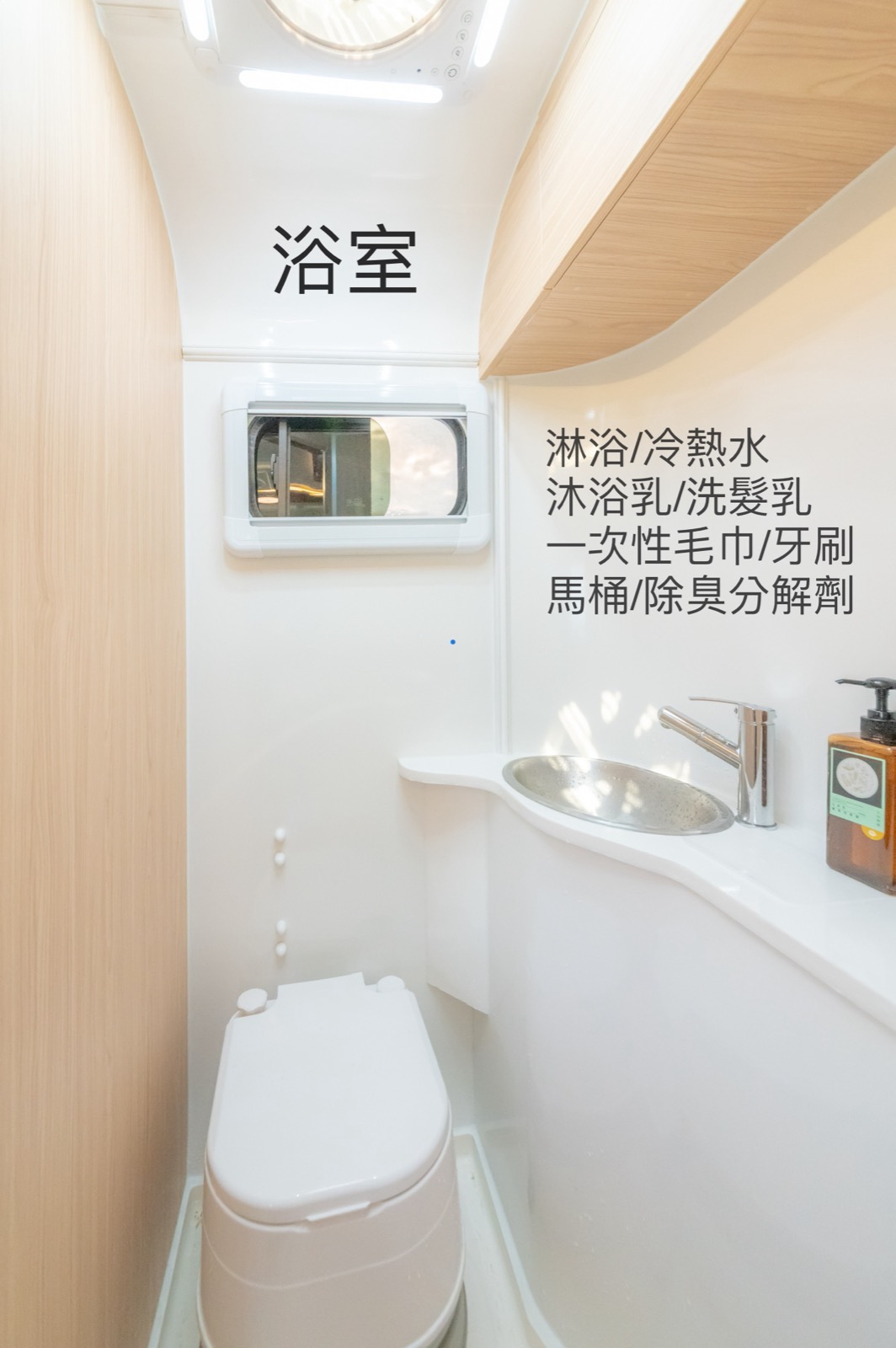
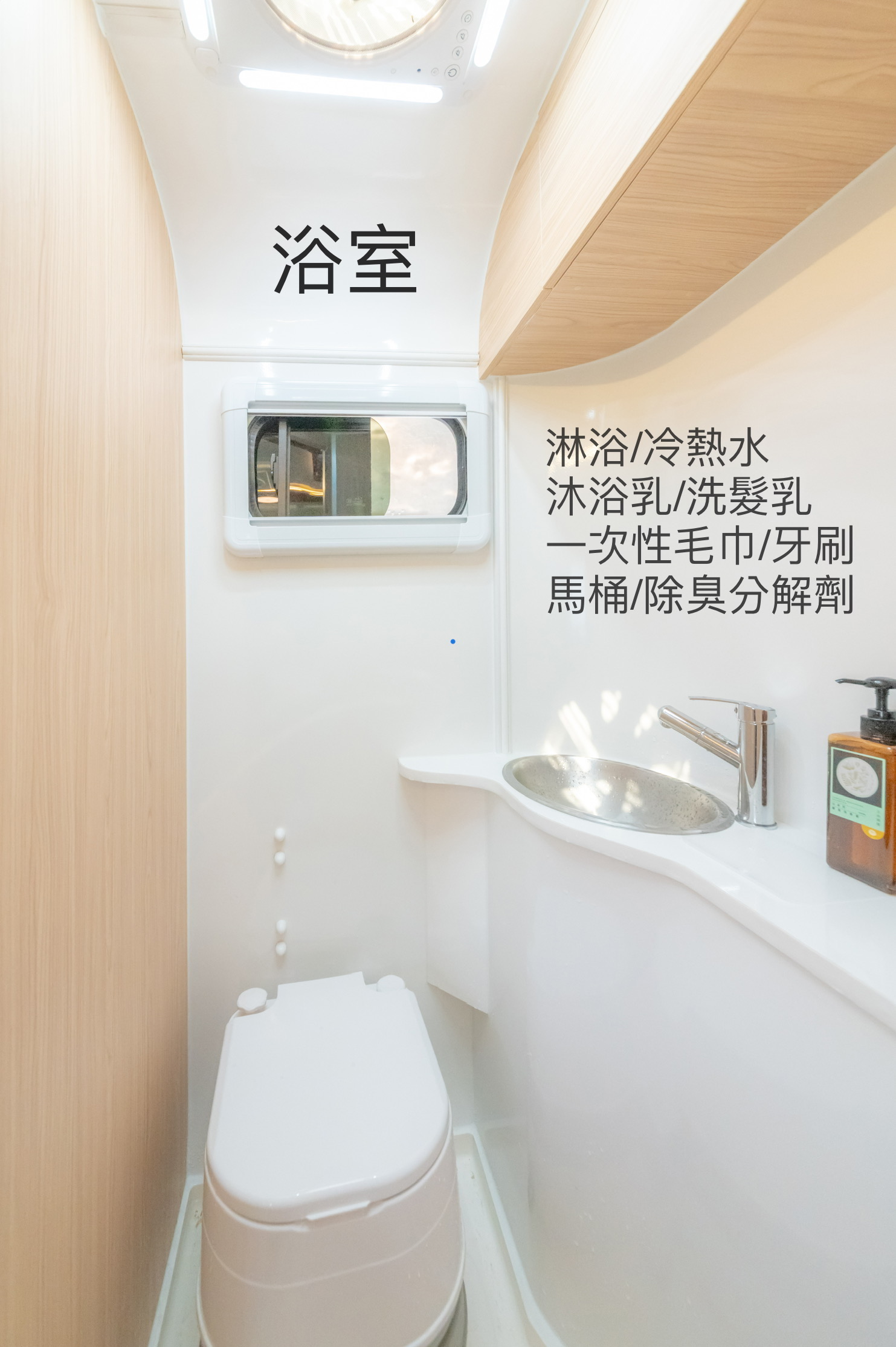
Private bathroom (shower/toilet/sink)Compact bathroom lowers the bar for beginners; keep showers short—tied to fresh water.
3. When driving, height is what matters most
Campervan height is about 3 m (~one story)—watch bridges, signs, branches, and eaves.
Do not enter underground parking
Do not force low awnings: Old-building awnings/eaves and entrance canopies under ~3 m clearance—our ~3 m van cannot pass safely. Detour or use open lots with enough height.
Mountain roads: watch for branches
Convenience stores, gas stations, B&B eaves—extra care
Take your time backing up and turning
Keep a steady pace—avoid sharp turns and hard stops like in a small car
Scratches and damage:Minor marks from normal use are fine; roof/awning/tree hits causing large damage or leaks may incur repair costs. When parking, pick the first or last space in a row—easier for others.
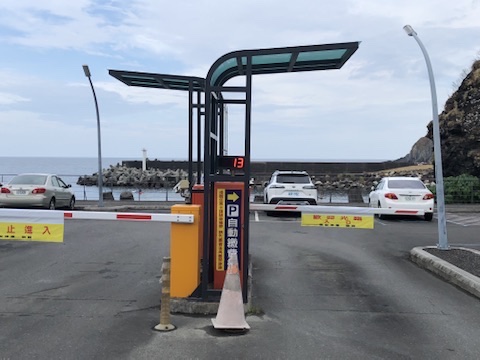
Real example: parking entrance canopy
Canopies like this are too low for the campervan. Treat anything under ~3 m as no-go—get out and look, or use another entrance.
Driving safety: clearance, trees & parking
Detour rather than squeeze under low clearance; leave space when parking—watch the right rear corner.
4. How to manage power, A/C & charging
In short: top up whenever you can—don’t wait until empty to fully recharge.
Campervan power isn’t like a phone or other gadgets: don’t wait until empty and then fully charge. Top up whenever you have a chance during the trip. Average charge rate is about 8%/hour, so it takes time—use these windows to keep charging:
At camp: plug into shore power as soon as you park, and use while charging.
On the road: at sights, while driving, or during lunch/dinner, run the onboard generator on the left side of the van to keep topping up.
Onboard battery covers lights, phone charging, fridge, and basics. A/C drains faster: at full power, expect roughly 8 hours. As above, that doesn’t mean run to empty then recharge—while using A/C, keep charging whenever you can. For 3 days 2 nights without A/C, power is usually enough; if you’ll run A/C a lot, prefer campsites with shore power, and try not to drop below 10%.
How to read battery level? Use voltage as a guide
Near the coulomb meter you’ll find a voltage chart:
Volts
Approx. charge
13.5V
90%+
13.4V
~80%
13.3V
~70%
13.2V
~60%
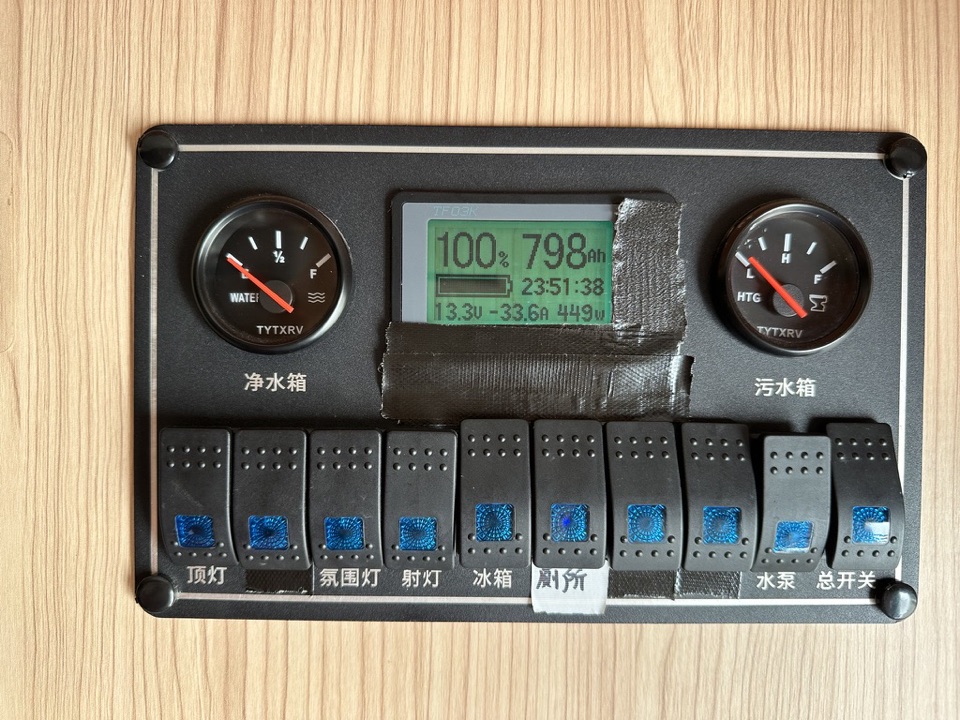
Center: positive = charging, negative = draining; right side shows watts in use—higher means more draw.
Campervan power panel guide
Panel shows charge level, charge/drain status, and live wattage.
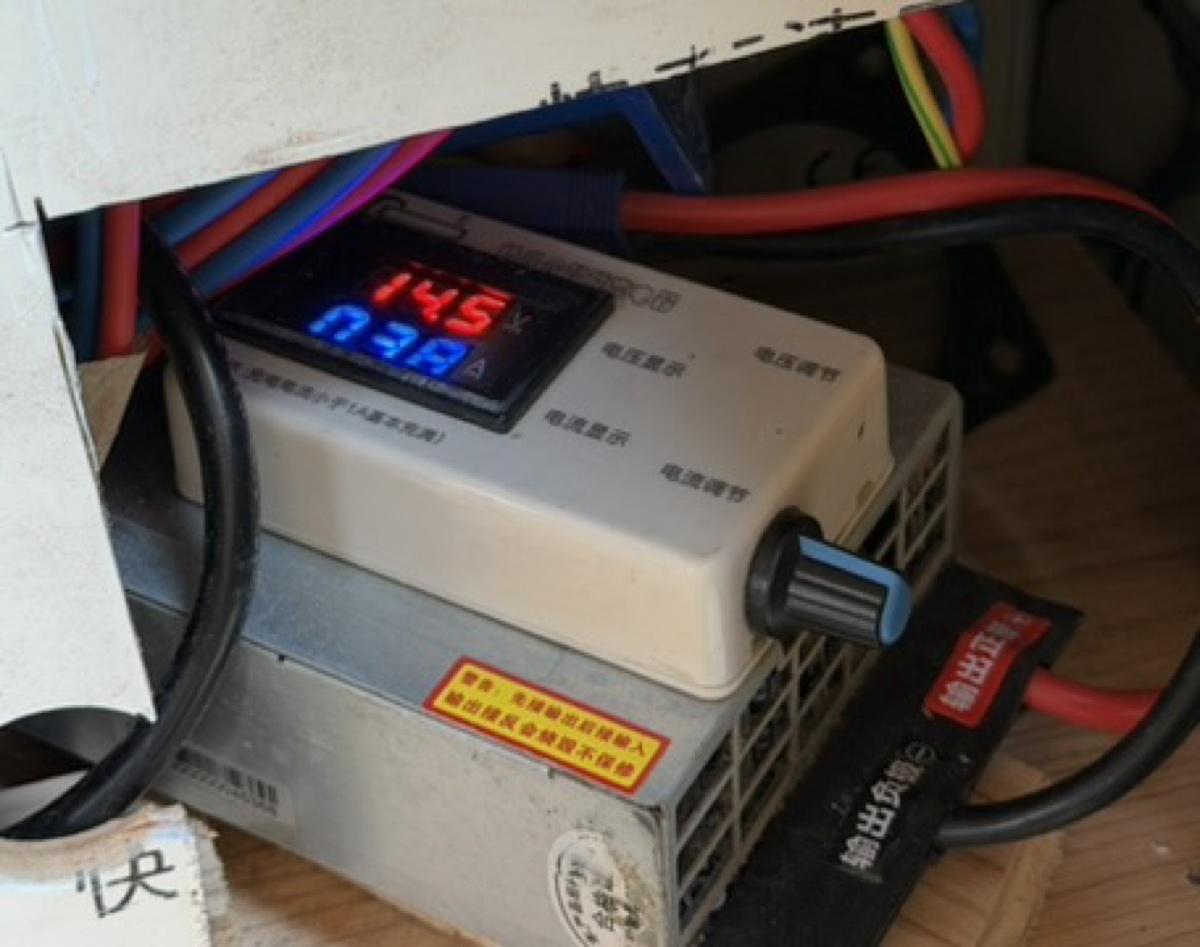
Adjusting charge speed? Blue knob below coulomb meter
Open the door below the meter for the blue knob that controls charge rate. If the campsite limits power, set it to middle or below to avoid tripping breakers.
Charge rate knob location
At weak campsites, keep the knob at middle or below.
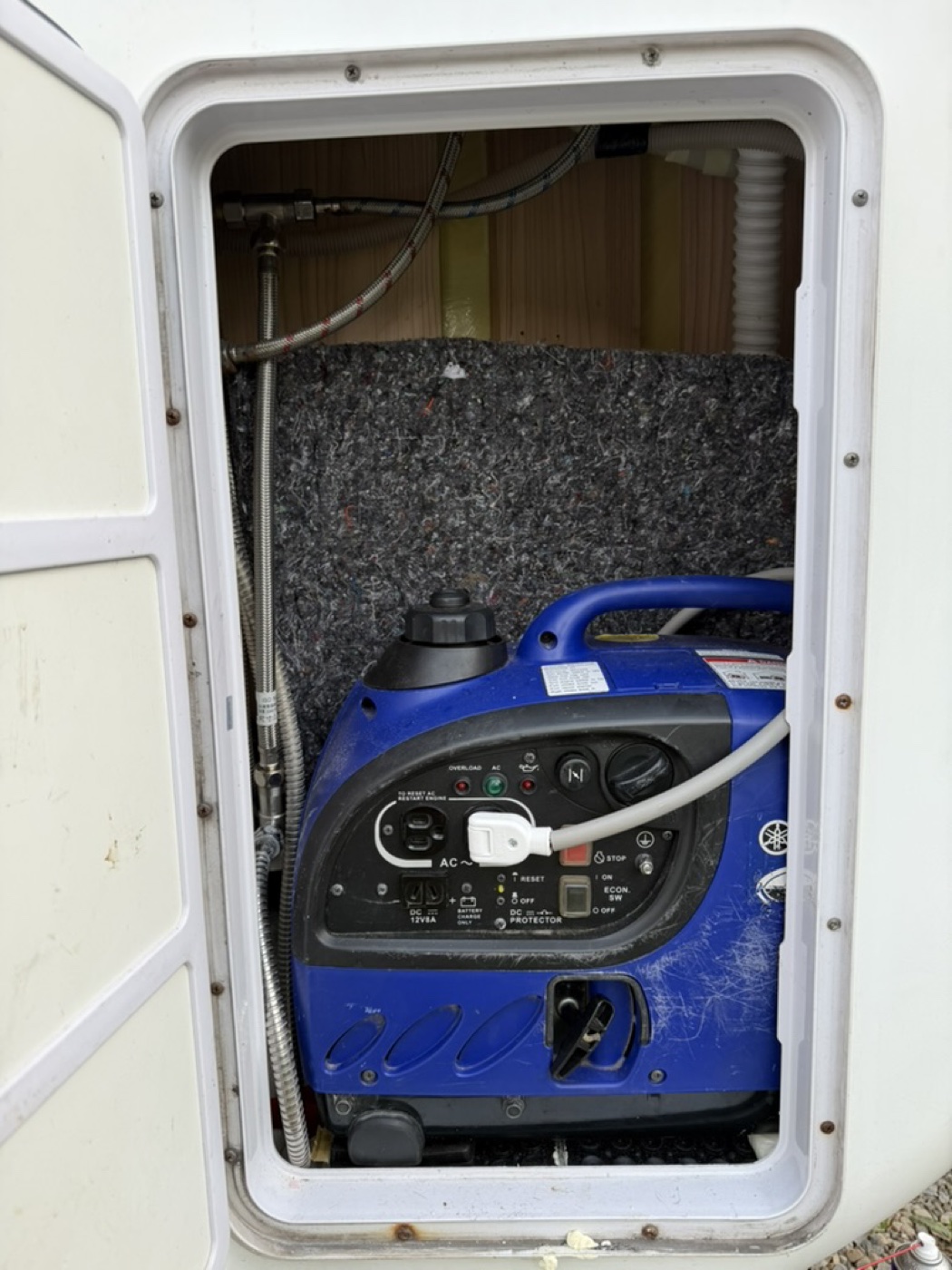
Built-in generator (Yamaha): left rear compartment
The left rear compartment has a factory Yamaha built-in generator for charging while driving or during the day. It is noisy inside, so top up before bedtime; for extended overnight A/C use, choose a campsite with shore power.
Built-in generator in left rear compartment
Charge while driving or during the day; top up before bedtime and use campsite shore power for extended overnight A/C.
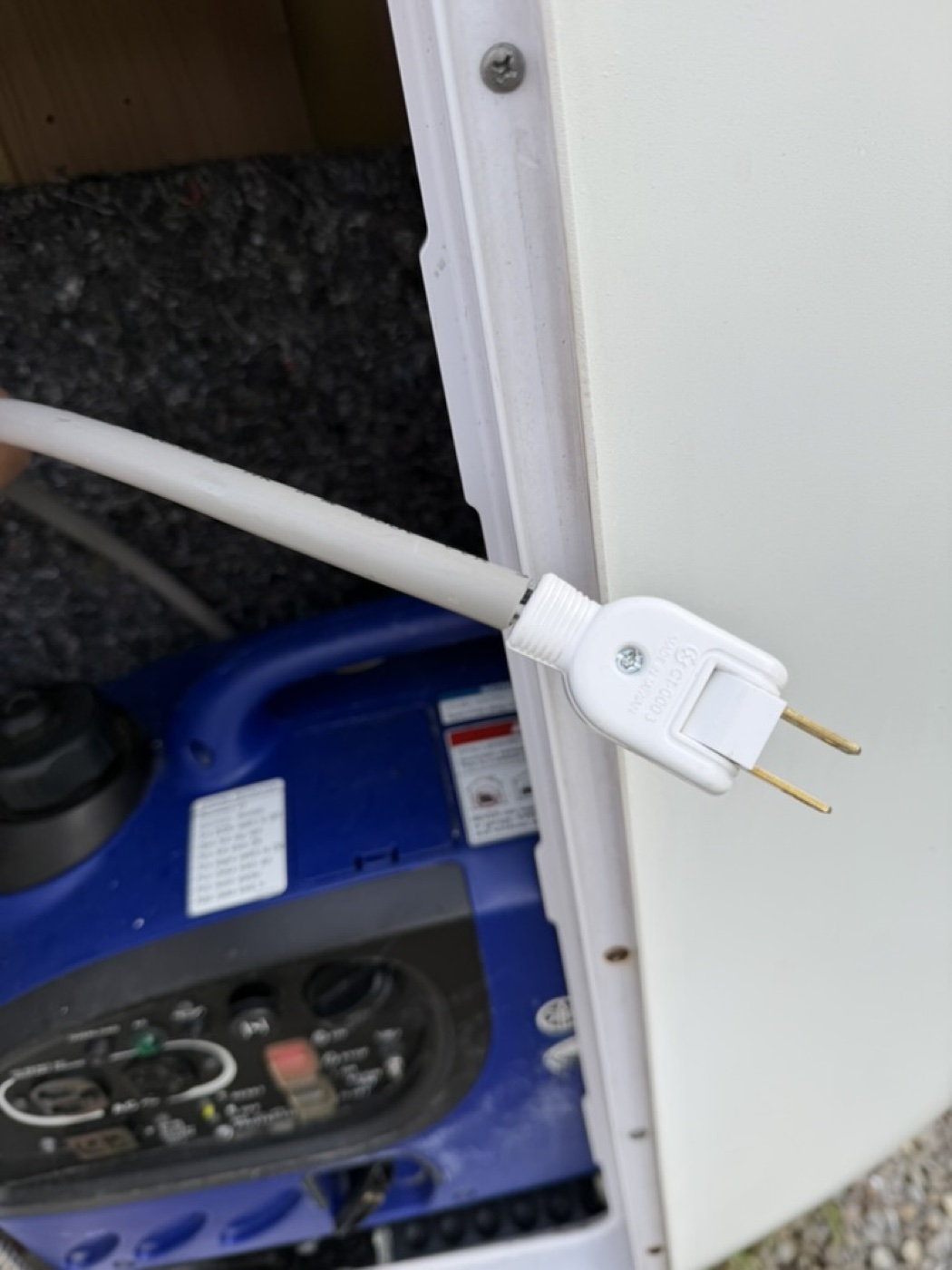
Campervan charge plug: same for shore power and generator
This white two-pin plug is used for both campsite shore power and generator charging:
Campsite: use the extension cord to the campsite outlet.
Built-in generator: plug directly into its AC outlet.
Campervan charge plug (white two-pin)
Shore power: use extension cord. Generator: plug into AC outlet.
5. Water tanks, shower & bathroom
You can shower—it’s not a hotel bathroom; not for long, heavy use.
110 L fresh water for washing, showering, and daily use.
Water is limited—short rinses; at campsites you can also use site bathrooms.
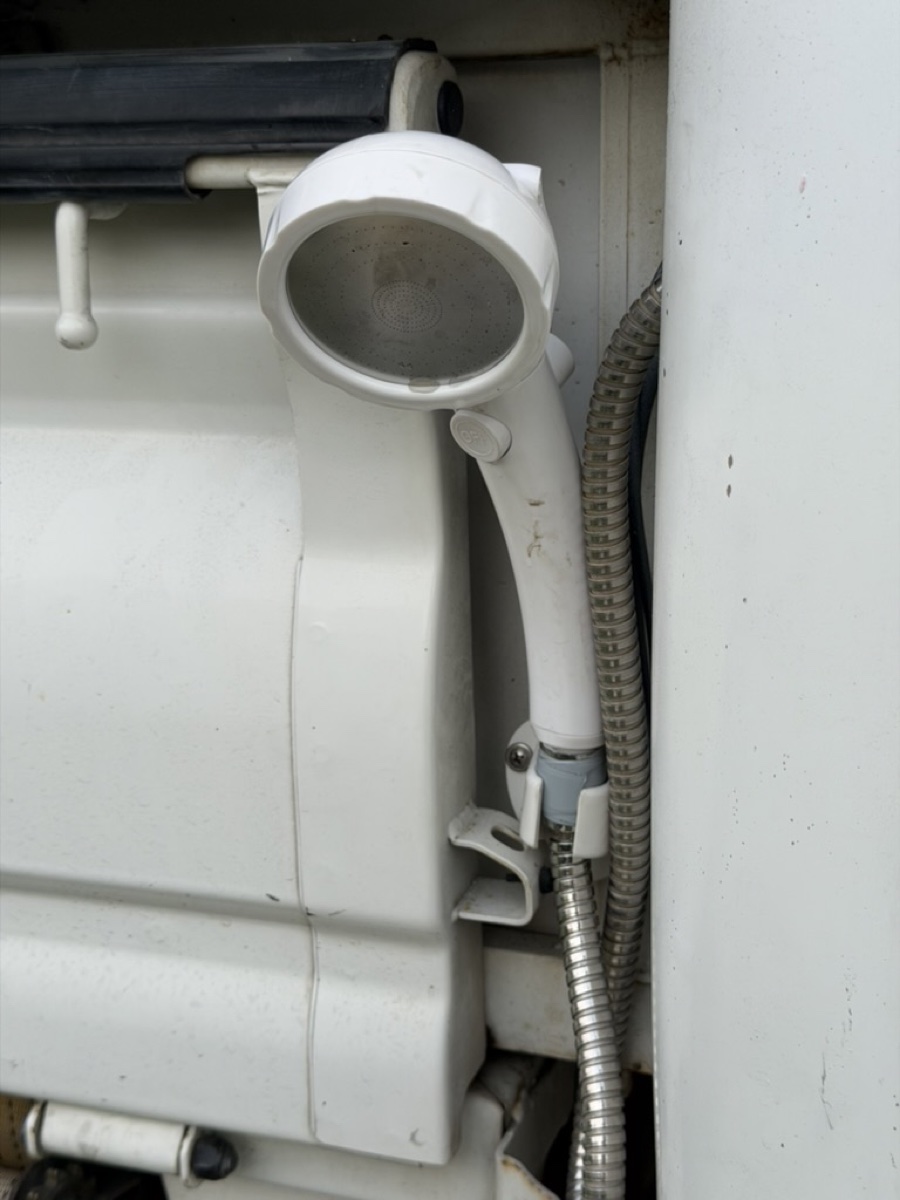
Exterior rinse shower (left rear) for feet, sand, pets after the beach. Turn on WATER PUMP first; turn off and stow hose after.
Exterior rinse shower (left rear compartment)
Turn on water pump first; shake dry and stow when done.
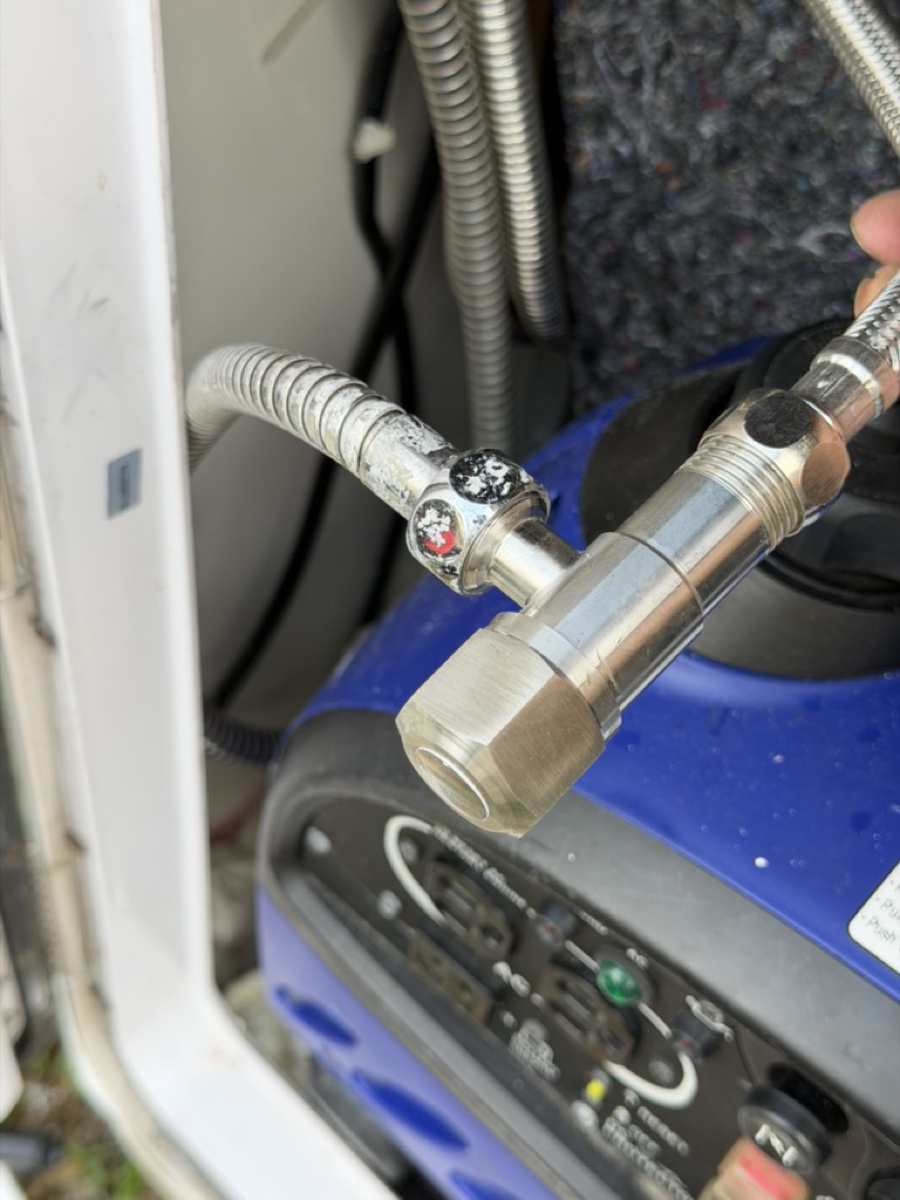
Rinse shower hose & quick connect
Before stowing, check fittings are tight and hose isn’t kinked.
Water & bathroom reminders
~110 L fresh water—short showers, turn off firmly; heater needs gas and power.
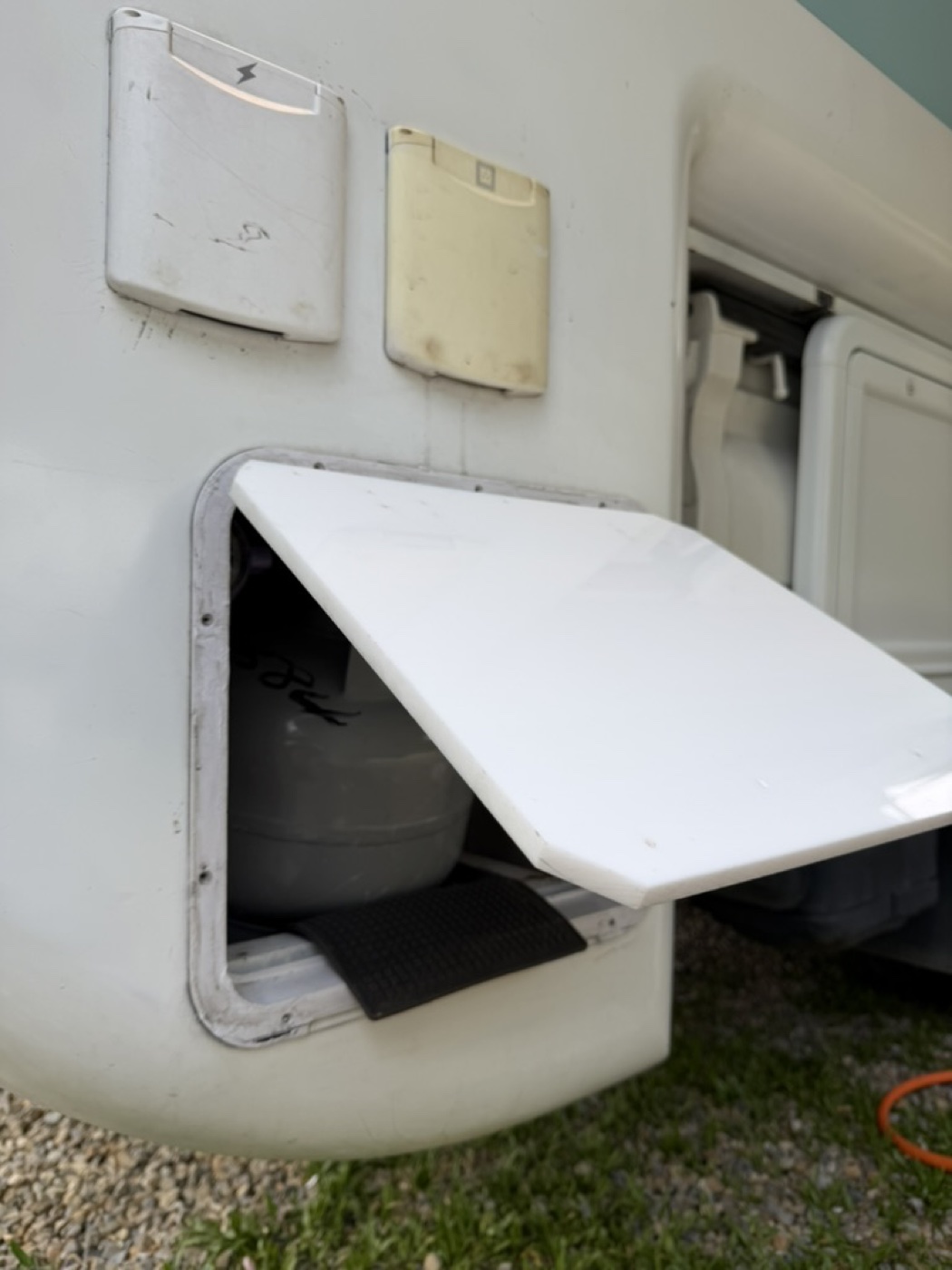
LP gas (right rear compartment)
Usually ready to use; if hot water fails, check gas per handover.
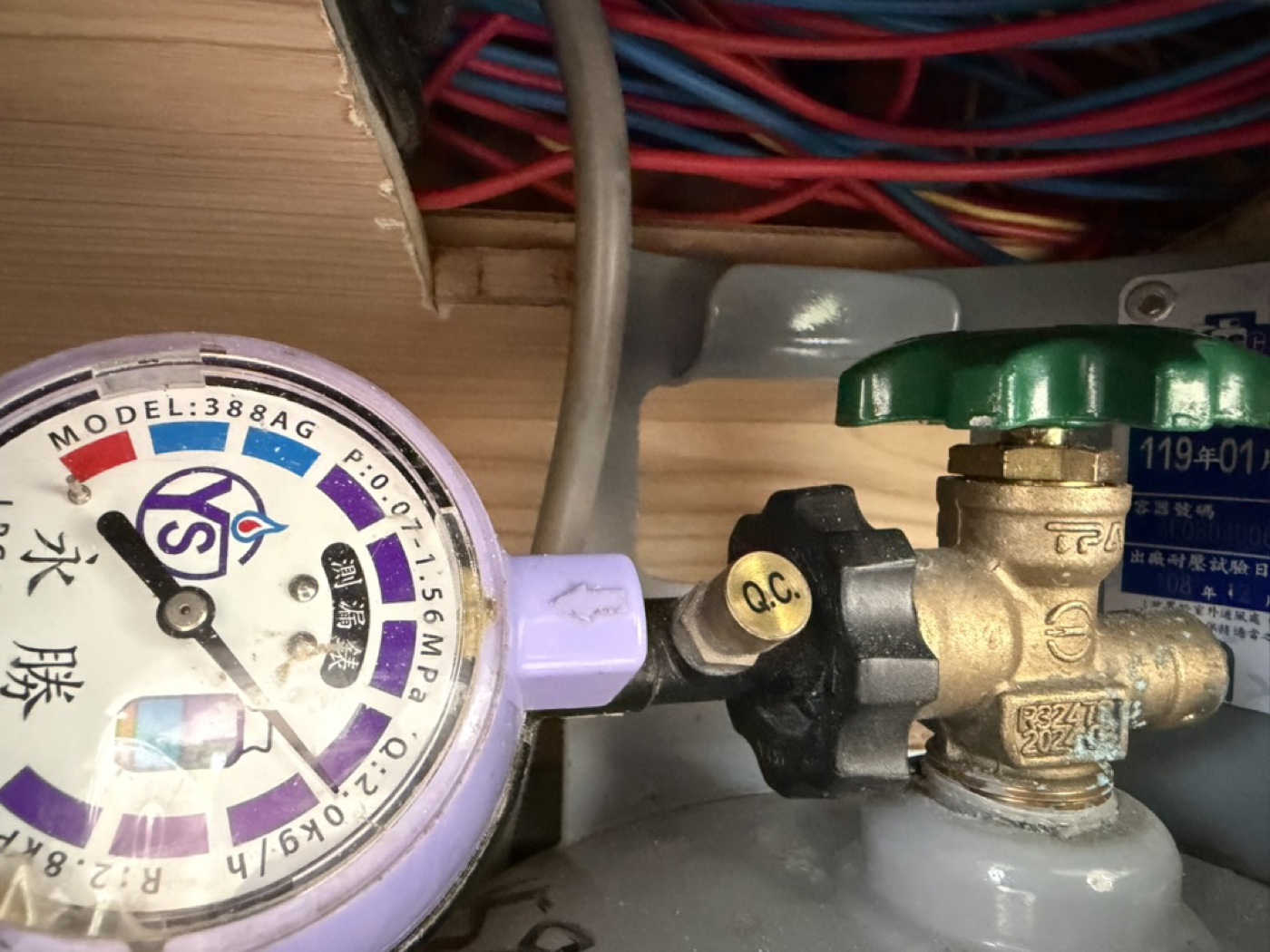
Regulator & main valve
Follow handover-day demo for valve sequence—don’t force valves.
6. How to use the beds (video & diagrams)
Two double beds—one fixed, one from the dinette. Watch the video, then follow the steps below.
Dinette to double bed|Tutorial
About 46 seconds|How to fold the living-area table and set up the second double bed. For the full interior tour, see the main intro video above.
We demo again on the real van at handover—watching early helps on the day.
Supplementary tutorial (2)|Operation reference
If the video above won’t play, or you want another walkthrough of interior operations, use this one.
One is fixed (over cab); the other converts from the dinette.
Convert dinette to bed at night; restore for meals and lounging by day.
Fits 5 adults or 4 adults + 2 children.
Bed conversion: dinette → in progress → bed ready
In-van step sequence—cross-check with the video.
① Dinette mode (daytime)
Eat, chat, store gear—fold table and cushions before bed.
② Converting
Fold table, adjust backs and cushions—follow handover and video.
③ Bed ready
Add bedding for the second double bed—with fixed bed, sleeps 5 adults or 4+2 kids.
Two double beds layout (diagram)
One fixed over cab, one from dinette conversion.
7. Outdoor bundles & entertainment gear
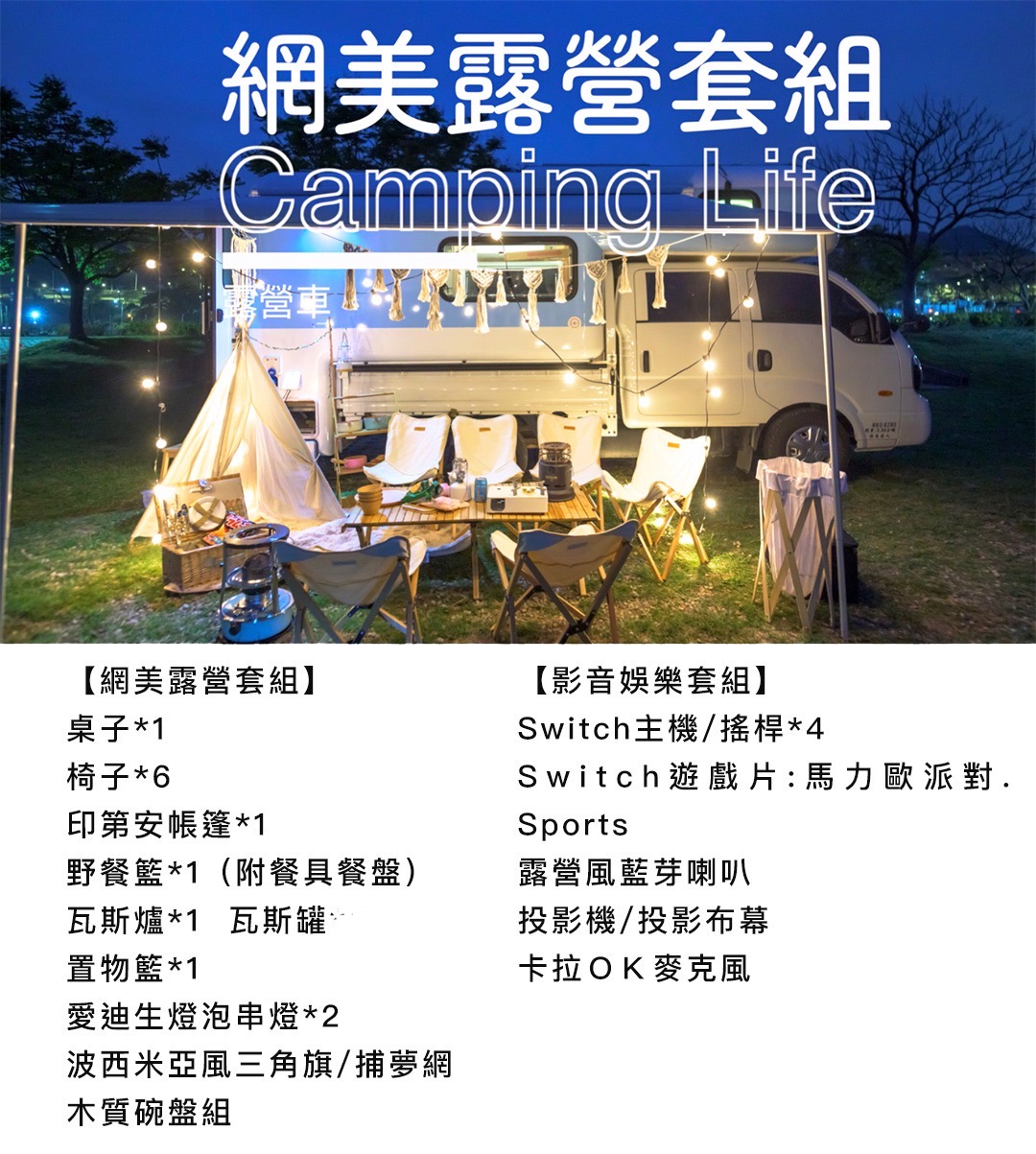
Outdoor table/chairs, lights, tent/canopy décor, projector, Switch, karaoke, etc. Bundle contents and promos: Price & Van|Limited offer; here we focus on how to use and pack away.
Entertainment bundle (Switch, projector, Bluetooth speaker, screen, karaoke mic)
Actual items depend on booking and stock—confirm when reserving
Use & return:Repack as received; keep lights and electronics dry; damage or loss may be charged. Add-ons & promos:See limited offer on Price & Van; confirm stock when booking.
Glamping photo bundle (real setup)
Items per booking/stock; repack and return after use.
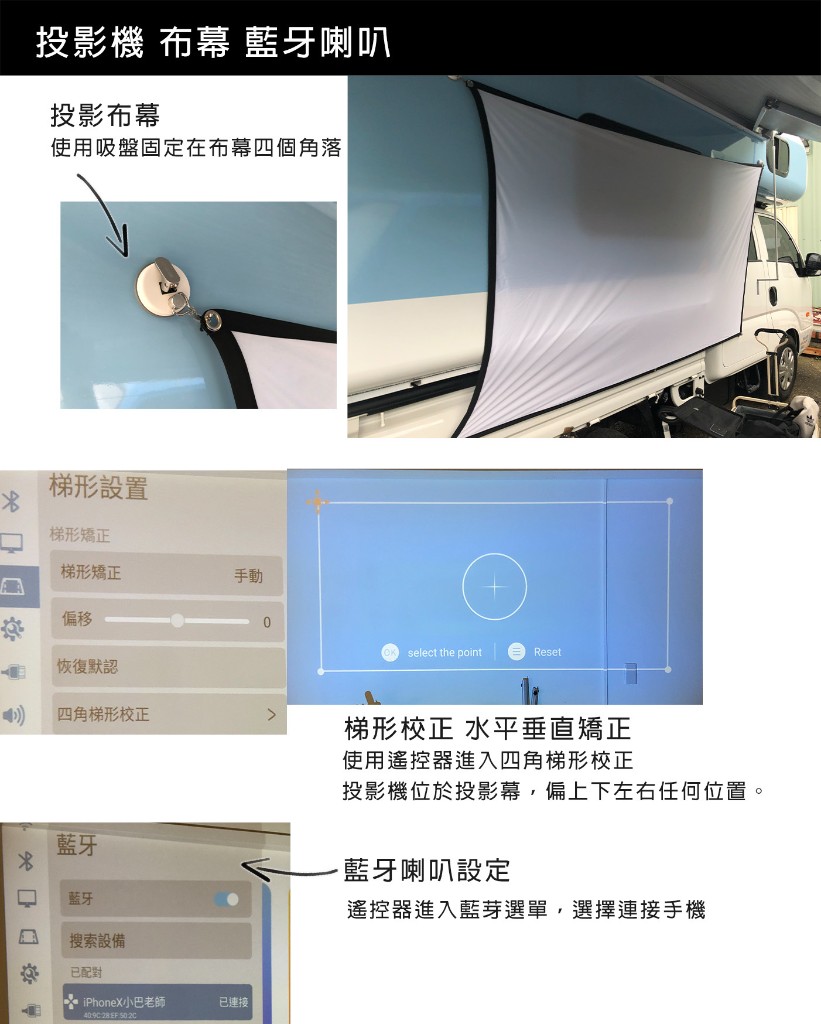
Projector & audio bundle diagram
Outdoors: rain and power; dry connectors when coiling cables.
Projector screen & Bluetooth speaker (real setup)
Karaoke, Switch, etc. may be included—confirm at booking.
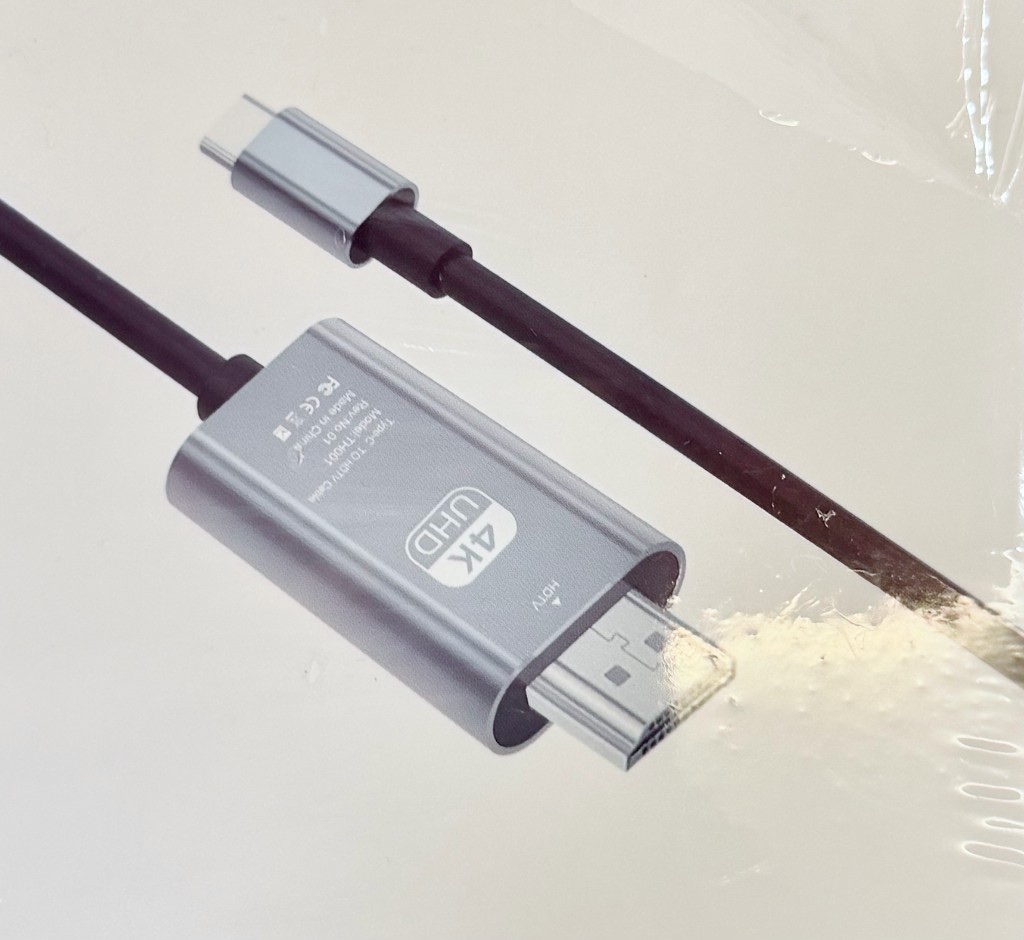
Type-C to HDMI cable
For laptop/tablet/phone casting, check ports and adapter—photo us if unsure.
8. Before return—please check
5 minutes with this list saves deposit settlement back-and-forth.
Personal items removed
Tableware and gear returned to place
Trash tidied
Outdoor furniture packed
Lights and extension cord packed
Water and power off
No obvious interior mess
Fuel topped up per agreement (full tank return, diesel)
ETC, parking, or other fees settled later
Deposit refunded after deductions
9. Insurance & damage responsibility
Coverage scope, third-party and passenger protection, chassis vs camper box damage, and normal wear vs major damage.
A note for peace of mind
Campervans live outdoors—light branch marks and small surface scuffs on mountain or campsite roads are normal; we don’t charge for that kind of everyday wear.
We focus on clear, serious damage—e.g. roof hitting a stainless awning frame, large scrapes, waterproofing failure and leaks. Those require repair and are charged per actual loss.
With normal careful use you’re usually fine—watch height, rear overhang, and backing space; avoid awnings, low clearance, steel frames, branches, and overhead obstacles.
Insurance essentials before departure
Third-party and passenger excess liability is up to NT$20,000,000 total per accident, with third-party, passenger, driver injury, and Type B vehicle-body cover also carried.
For an ordinary covered vehicle-body collision, a compliant renter's contractual responsibility is capped at NT$10,000 per accident when the authorized-driver, lawful-use, immediate-reporting, and insurer-approval conditions are met.
The current NT$5,000 deposit is settlement security, not the maximum accident liability.
The camper cabin, roof, interior, water/electrical systems, appliances, awning, and camping equipment are not part of the insured automobile body.
Operation and use questions below; rates, deposit, rental length, delivery: Price & Van FAQ.
Category 1|Capacity & beds
Legal seating and recommended sleepers.
Legal seating: 6.
Up to 5 adults or 4 adults + 2 children. Two double beds—one converts from the dinette.
Category 2|Driving
License, height, daily distance, etc.
Standard passenger car license (automatic) is enough—no special camper license.
Height ~3 m (one story)—do not enter typical underground parking; check bridges, awnings, signs, and trees.
Safety and buffer time first—about 200 km/day suggested, per rental agreement. The point is stopping to enjoy.
Yes. 30-minute handover on basics, water, power, A/C, beds, bathroom—plus this full guide.
Category 3|Equipment & power
Tableware, fridge, stove and A/C.
Basic tableware and simple prep space—confirm at handover.
Yes—fridge and freezer, good for 2–3 day trips.
Yes—portable stove for noodles, soup, breakfast, coffee, hot pot, or camp cooking.
Yes. At full power, expect about 8 hours on battery alone. In practice, don’t run empty then recharge—top up with shore power or the generator whenever you can while using A/C. For longer use, prefer campsites with shore power.
Category 4|Water & bathroom
Fresh water, hot water, toilet.
Yes. Private bathroom with hot/cold shower—110 L fresh water for ~4–8 showers. Conserve water; not for long hotel-style baths.
Interior use is fine in rain; keep outdoor furniture, lights, and projector dry.
Category 5|Campsites & travel
Where to stay, roadside overnight.
Not required, but night one at a campsite with power, water, and bathrooms helps you learn charging, water, shower, and systems.
Park at campsites, park lots, or beaches where allowed—not all campsites accept campervans; confirm ahead. Outdoor gear only at legal sites.
Category 6|Pets & cleaning
Pets, cleaning fees.
Small/medium dogs OK (groomed beforehand); cleaning NT$800 per trip—other terms at handover.
No smoking in the van—cleaning fee NT$2,000–6,000 if violated.
Light branch marks and small scuffs are usually normal wear. Clear impacts, large damage, leaks, or safety issues may be deducted from deposit; excess billed separately. Third-party and physical damage insurance apply, but chassis vs box/roof/add-ons may differ—many box/roof hits aren’t covered. See insurance & damage.
Stop safely, photo, and contact us. Leaks or structural roof damage can be costly. Always watch height (~3 m) and rear space—avoid awnings, low clearance, steel, branches, underground parking. See insurance & damage.
More questions?
For operation details, use the contents above; for dates and pricing, see Price & Van or message via booking page.