
Campervan Driving Safety|Avoiding Narrow Alleys, Low Signs, Awnings and Scrapes
Real examples show how to judge clearance near narrow alleys, utility poles, low signs and awnings in Taiwan, what to do after contact, and how repair costs and insurance differ.
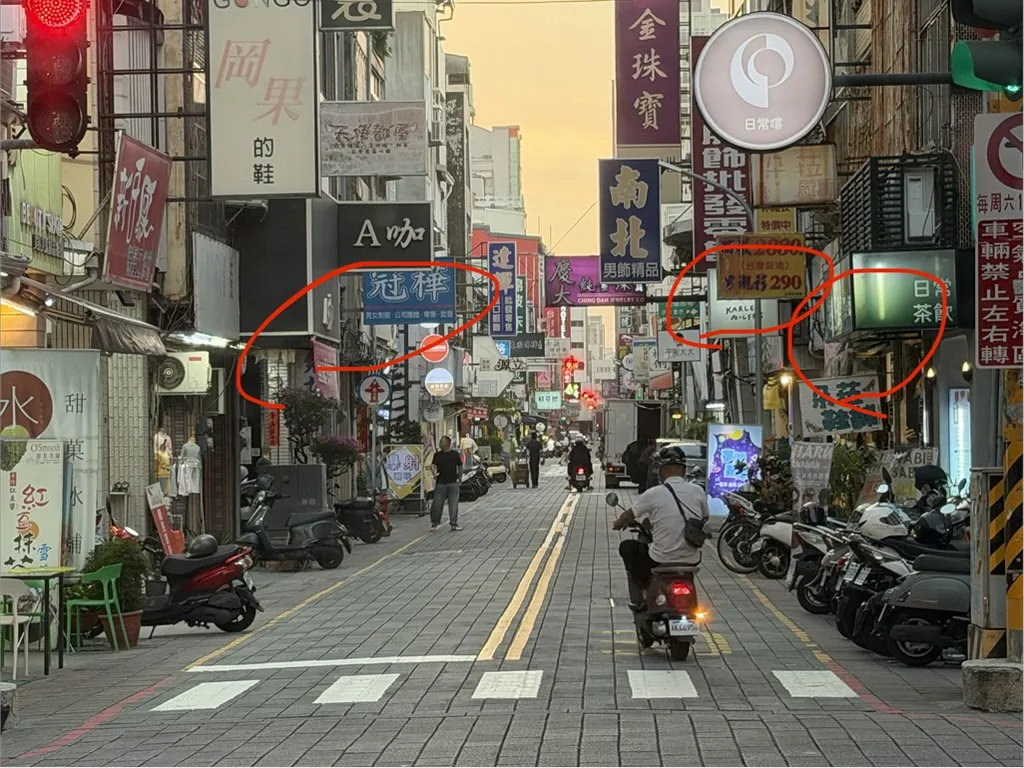
A campervan is not difficult to drive—the challenge is judging it like a small car
The Joy Forest campervan is approximately 5 m long, 2 m wide and 3 m high. It is manageable on normal roads, but the cabin is taller and wider than a passenger car, and the rear of the vehicle follows a different path during a turn. The most common scrape risks are not expressways. They are narrow alleys, utility poles, low shop signs, building awnings and parking too close to the roadside.
Case 1|A handover in a narrow alley, followed by contact with a utility pole
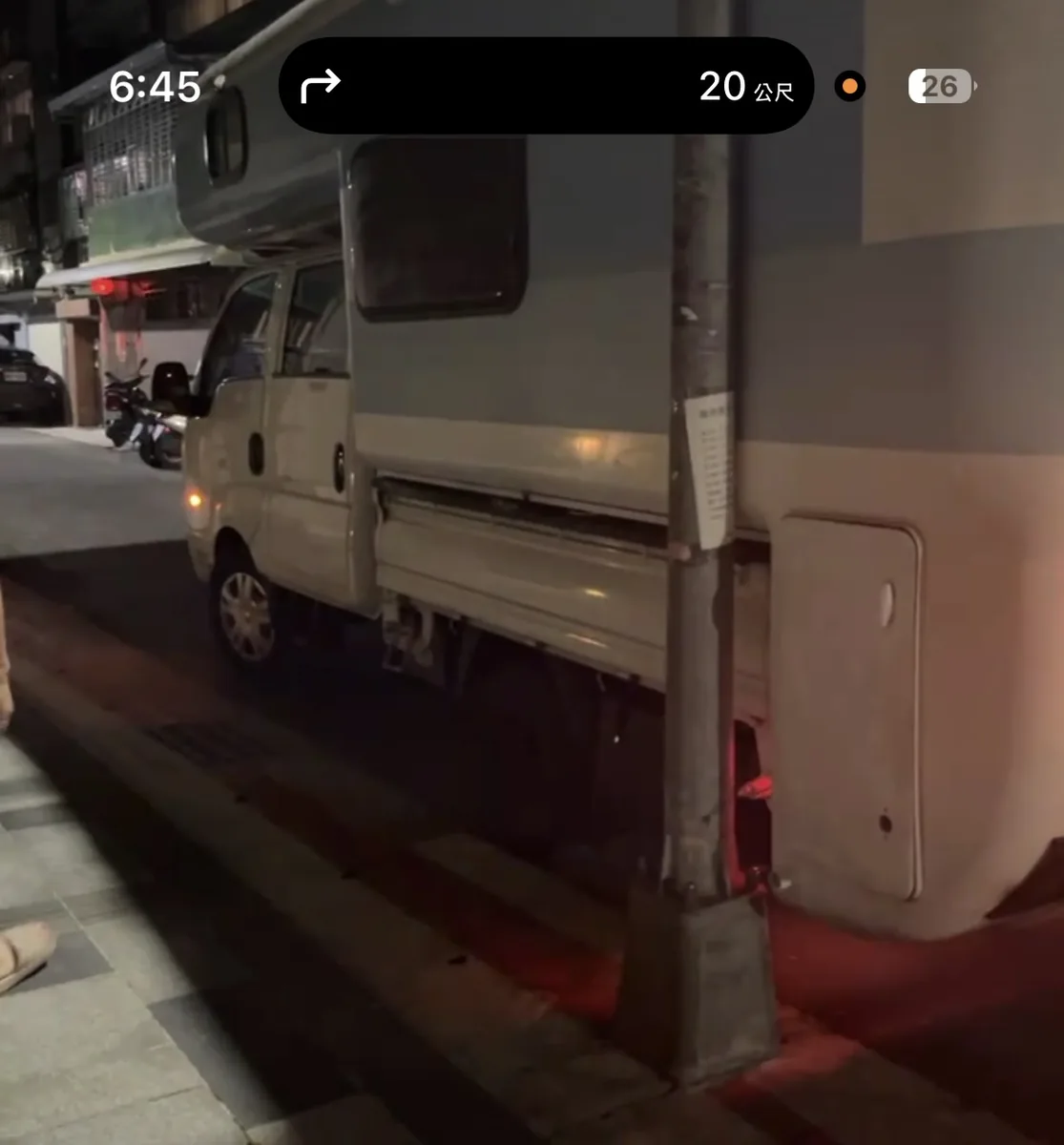
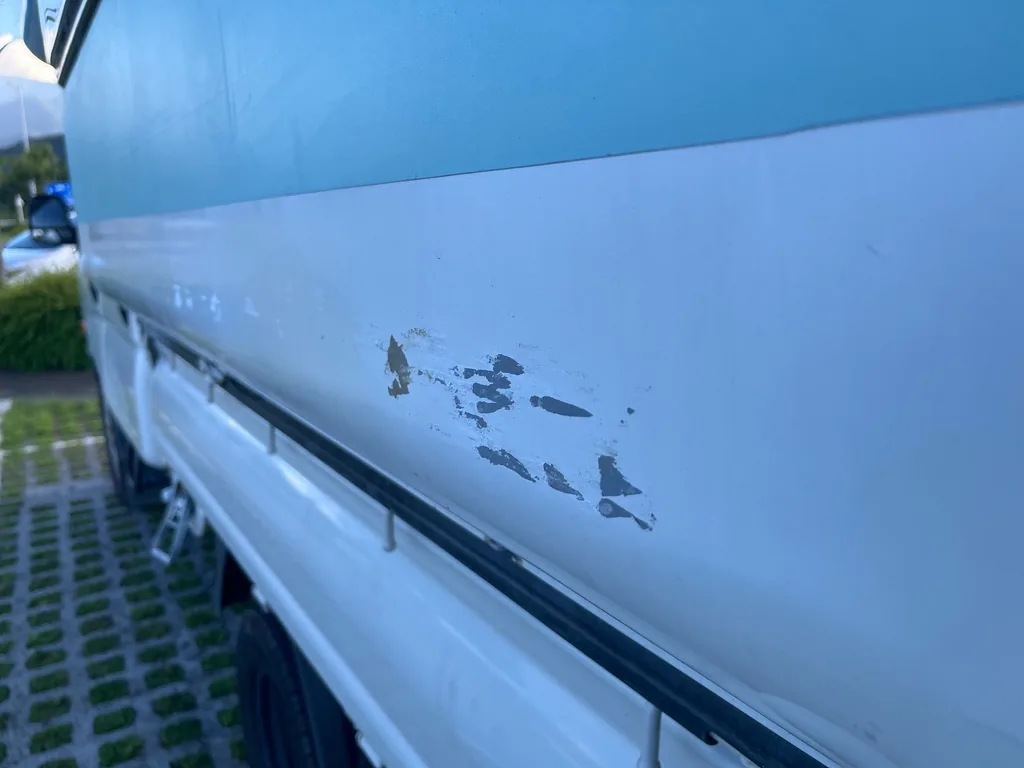
This handover took place in a narrow Taipei alley. The campervan had been parked very close to a utility pole. After the handover staff left, the guest moved forward and the side of the campervan touched the pole in the confined space.
From what was known about that particular position, if the vehicle had first been stopped and the driver had confirmed sufficient room ahead and to the left, turning the steering fully left and inching forward could have moved the body away from the pole. However, this is not a universal recovery instruction. The correct movement changes with the contact point, wheel angle, nearby obstacles and pedestrians. When unsure, stop securely, get out to inspect, and ask a companion to stand where the driver can see them.
A better approach: hand over and practise on a wide road or open area
- Choose a well-lit, wide location where the complete vehicle can stop safely.
- Practise the first start, reverse and turn in an open area to understand the width and rear-body movement.
- If navigation leads into a narrow alley, do not continue simply because the destination is close. Stop safely and reroute.
- Detour around roads crowded by parked scooters, walls, poles or oncoming traffic.
Case 2|Low signs and awnings in older districts create both side and overhead risk
The campervan is about 3 m high, so “roughly one storey” is a useful visual reference. Older city streets, traditional markets and shopping lanes often have signs, air-conditioner frames, awnings or shelters projecting over the road. Some are not only too low; they also intrude from the side into the path of the camper body.
The simplest rule is: do not drive close, do not guess the height, and do not squeeze through. Treat anything projecting below approximately one storey as unsafe for this campervan. Choose a wider road, open-air parking or an entrance with confirmed clearance. Even if an awning appears unusually low or its compliance is uncertain, the driver must still avoid it rather than relying on how the structure should have been built.
Case 3|A low awning caused roof damage and water leakage
The following three photographs belong to the same, more serious incident. The campervan approached a low building awning, and the roof made contact with it. Damage extended towards the skylight, affecting the outer layer and waterproofing and later causing leakage. This was no longer a light cosmetic mark; it required repair of the opening, waterproofing and the surrounding structure.
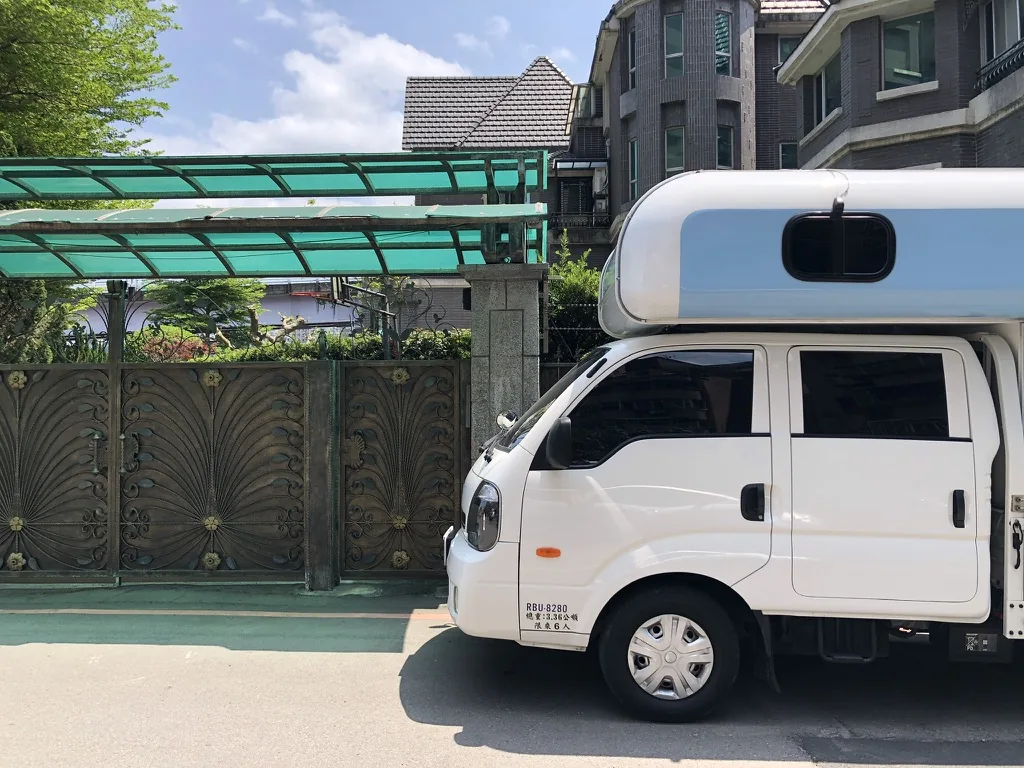
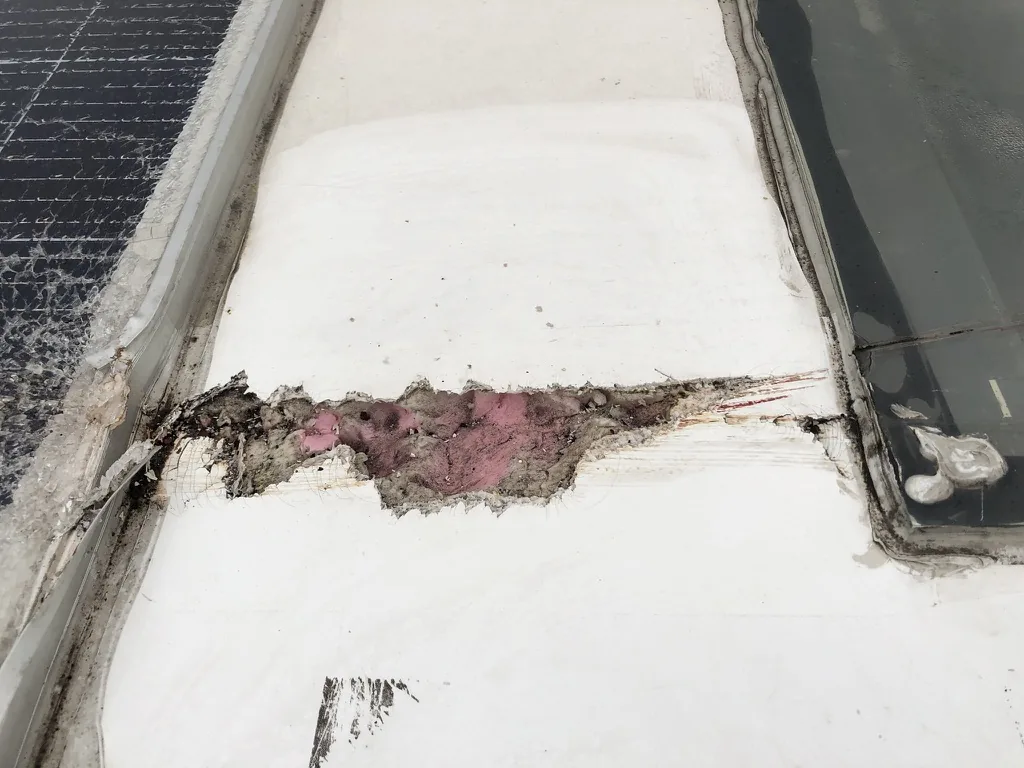
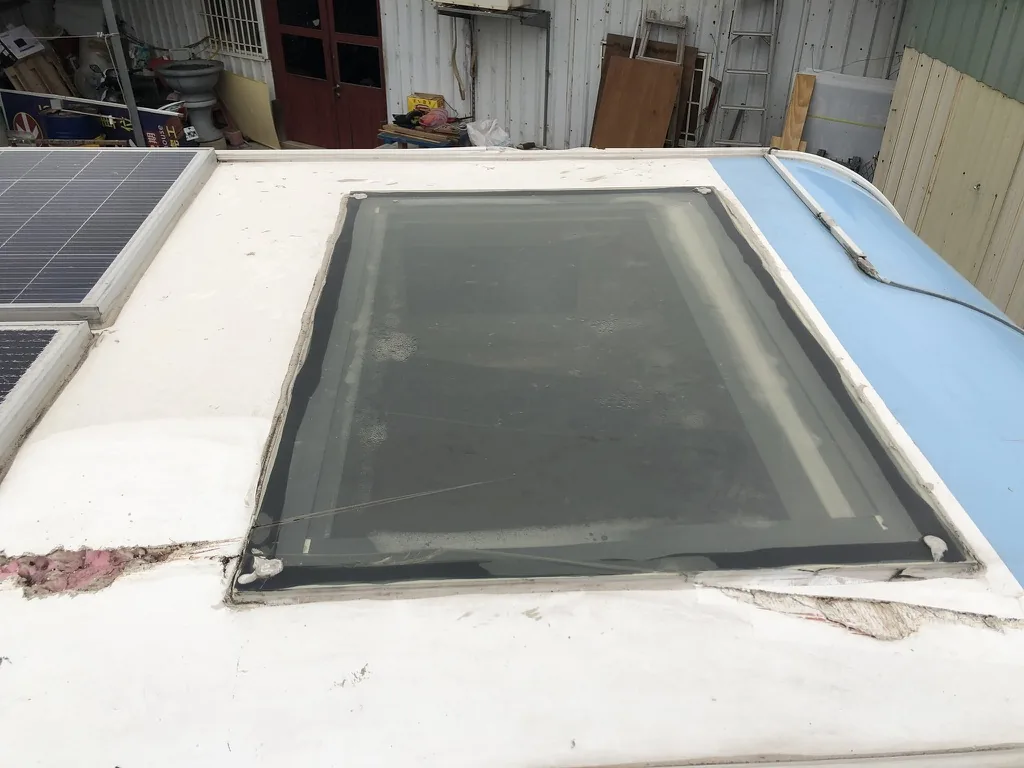
The past repair for this incident was approximately NT$10,000–20,000. It was still calculated from the repair actually required, rather than automatically charging for a complete roof rebuild or replacement. This range describes one historical incident only. Any future amount depends on the location, leakage, materials, labour and documented repair invoice.
If the campervan touches something or becomes stuck, follow this order
- Stop securely: do not keep moving simply to escape; a small scrape can become a hole, deformation or leak.
- Protect people first: switch on the hazard lights and call 119 immediately if anyone is injured.
- Take complete photographs: record all sides of the vehicle, the obstacle, road environment, contact points, number plates, signs and both close and wide views.
- Contact Joy Forest: send your location and photographs so we can confirm whether the vehicle should move and how to recover it safely.
- Call the police if another person, vehicle or property is involved: do not leave, settle privately, promise payment or arrange repairs without authorisation.
- For roof damage or leakage: do not climb onto the roof. If safe and practical, protect the vehicle from further rain and follow instructions for inspection or repair.
Understand repair, deposit and insurance separately
The campervan carries automobile protection including up to NT$20,000,000 total third-party and passenger excess liability per accident, together with third-party bodily injury, third-party property damage, passenger liability, driver injury and Type B vehicle-body cover. Any payment remains subject to responsibility allocation, the effective policy, individual limits, policy wording and insurer approval.
- The current NT$5,000 security deposit secures settlement of ETC, parking, fuel, cleaning, missing items, equipment or damage. It is not the maximum liability for every accident.
- For an ordinary covered vehicle-body collision, a compliant renter's contractual responsibility is capped at NT$10,000 per accident only when the driver is valid and authorised, use is lawful, police and Joy Forest are notified immediately, there is no private settlement, and the insurer approves the claim.
- The camper cabin, roof, attached structures, interior build, water and electrical systems, appliances, furniture, awning and camping equipment are not part of the insured automobile body. Holes, cracks, deformation, leakage and structural damage are handled at documented actual repair cost.
- Minor branch marks, light surface scratches and ordinary outdoor-use traces are generally not charged. A local impact is charged only when a reasonable repair is genuinely required.
A 30-second check before departure
- Will today's route enter underground parking, an old street, market or narrow alley?
- Are there height limits, awnings, signs, branches or frames below 3 m?
- Is the handover and first-practice location wide enough?
- When reversing or parking close to the side, can a companion guide from a position visible to the driver?
- When uncertain, are you willing to stop and look instead of taking the risk?
Safe campervan travel does not mean that you will never encounter a narrow road. It means being willing to stop once more, look once more and take a small detour whenever the space is uncertain.
Updated 24 October 2026. Repair amounts in this article are examples from specific historical incidents, not fixed quotations or liability caps. Actual handling depends on the incident, repair records, rental agreement, effective policy and insurer review.
42 Memorable Campervan Overnight Stops Around Taiwan
Explore 42 campervan-friendly campsites, scenic vehicle stays, hot-spring stops and family routes around Taiwan, with photos, maps, reasons to go and practical cautions.
Read article
Two Israeli Women’s 9-Day Taiwan Campervan Road Trip | East Coast, Green Island, Kenting & Sun Moon Lake
A detailed nine-day Taiwan campervan route by two Israeli women: Dong'ao, Ocean Chill in Hualien, Green Island's ocean hot spring, Dawang in Zhiben, Kenting and two lake-view nights at Sun Moon Lake.
Read article
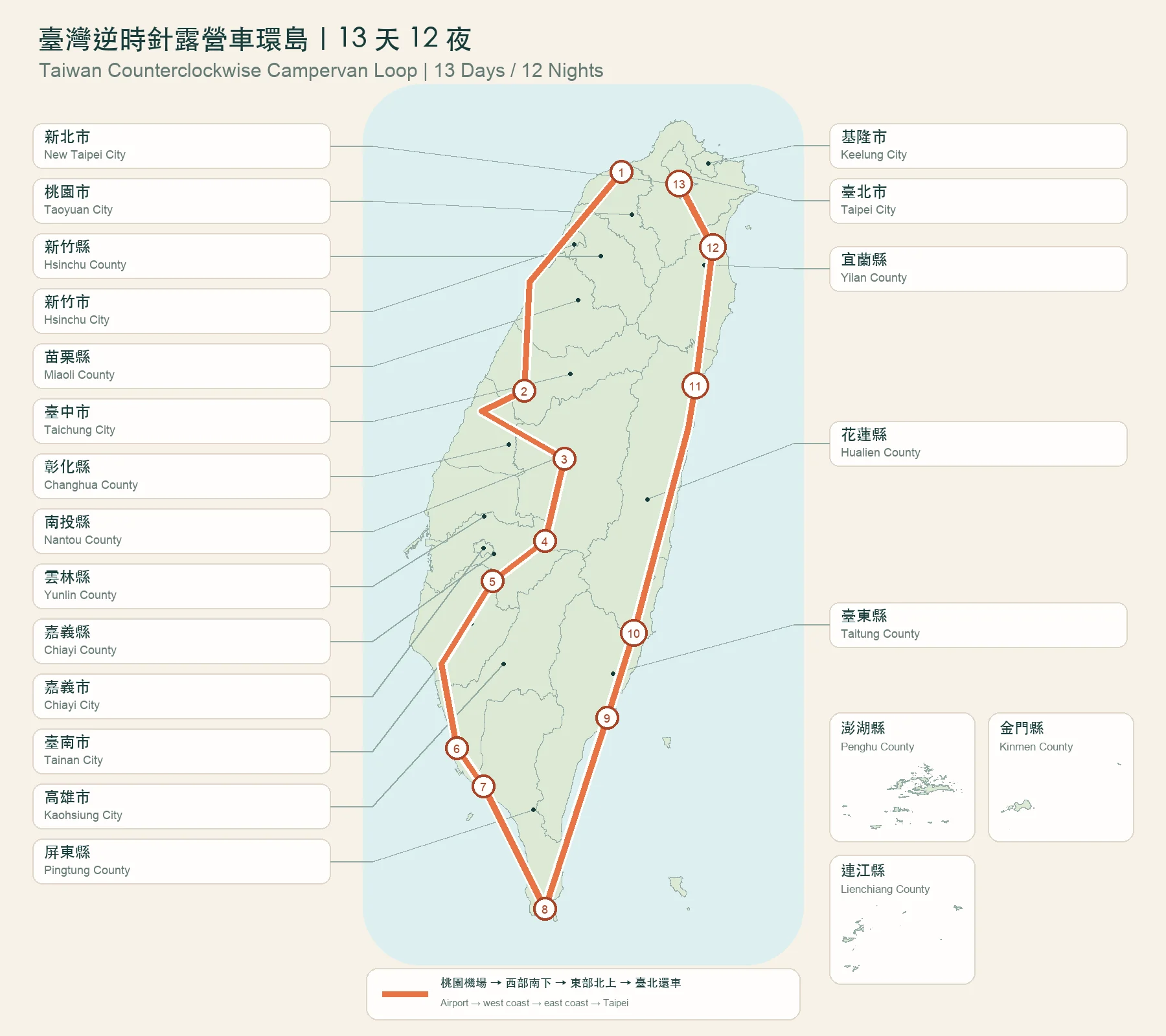
Taiwan Counterclockwise Campervan Loop | 13 Days and 12 Nights
A practical 13-day, 12-night Taiwan campervan loop for first-time international visitors: collect the van at Taoyuan Airport, travel south along the west, return north on the east coast and hand it back in Taipei.
Read articleWant to plan a trip like this?
Tell us your dates, group size, direction and whether you need delivery—we’ll help confirm rental options and pacing.